
Best CCTV System for Retail Stores Australia
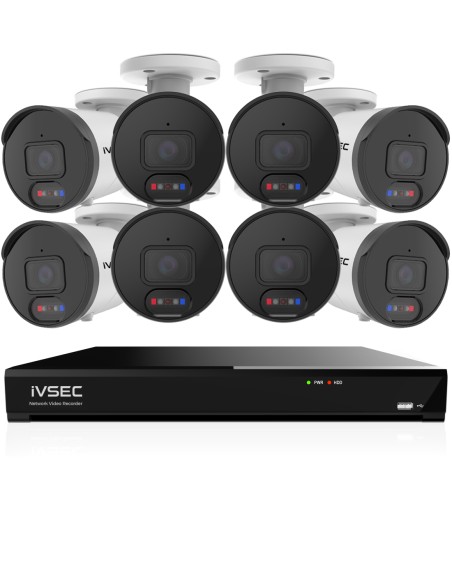
For most retail stores in Australia, the best CCTV system is a 6 to 8 camera PoE system running on an 8 channel NVR. That configuration covers the front entry, the point of sale, the main shop floor and the rear/service door, with two spare PoE ports left for expansion.
Retail CCTV earns its keep across four jobs: deterring and recording opportunistic theft, capturing the full POS transaction for refund and chargeback disputes, reviewing customer complaints and accidents, and documenting staff activity during stocktake or cash-up. All four rely on continuous recording, which is why wired PoE on a local NVR is the standard — the system records 24/7 to a surveillance-grade drive on your own network, independent of Wi-Fi and internet status. Wireless cameras look convenient but drop frames during busy periods and rely on batteries or cloud services. For the full comparison, see our wired vs wireless CCTV guide.
At a glance
Best overall: 6 to 8 camera PoE system on an 8 channel NVR
Small shop (under 80 m²): 4 camera PoE kit on an 8 channel NVR
Larger store / trade counter: 10 to 16 camera PoE system on a 16 channel NVR
Architecture: Wired PoE cameras + local NVR recording
Why Retail Stores Use CCTV Systems
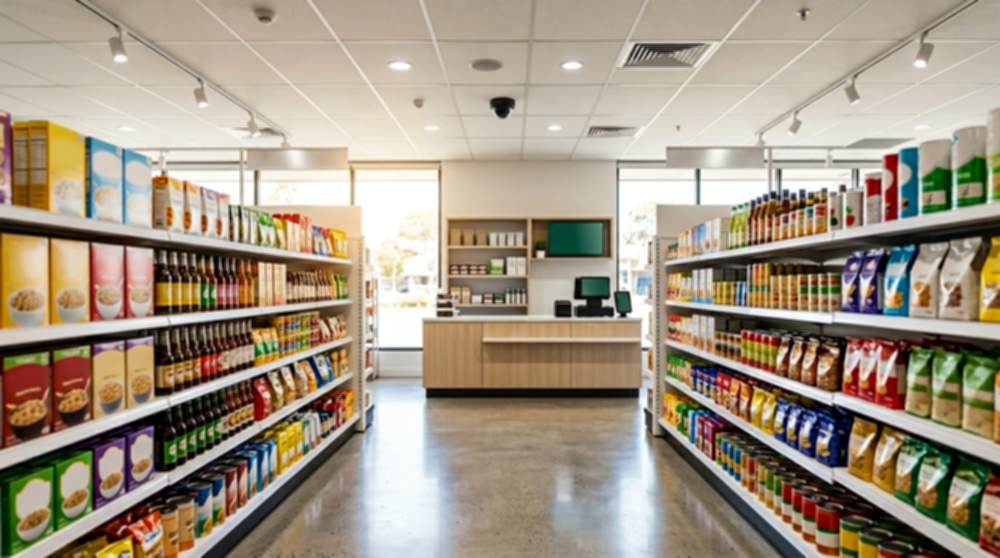
Retail is a cash-and-inventory business, and a properly specified CCTV system pays for itself in the first year on two fronts: loss prevention and dispute resolution.
Theft is the one most owners buy for, and visible professional cameras at the entry and over the shop floor have a documented deterrent effect on opportunistic shoplifting. Footage also makes the difference when an incident does happen — police investigations, insurance claims and internal reviews all move faster with a clear recording.
POS monitoring is the position that earns its cost the fastest. A camera framed over the register captures every transaction, refund, void and cash handling event. That footage is frequently the deciding evidence in staff-theft reviews and customer chargeback disputes.
Customer disputes — slip-and-fall claims, damaged-goods allegations, disputed refunds — resolve far more quickly with footage. Most complaints disappear the moment the recording is reviewed, and the small number that do not are handled on facts instead of opinions.
Retail systems run long hours and need continuous recording across trading hours and after-close, which is why the overwhelming majority of Australian retail stores run wired PoE on a local NVR. For shops, cafes and offices more generally, see our best CCTV system for small business guide.
Typical Camera Placement in Retail Stores
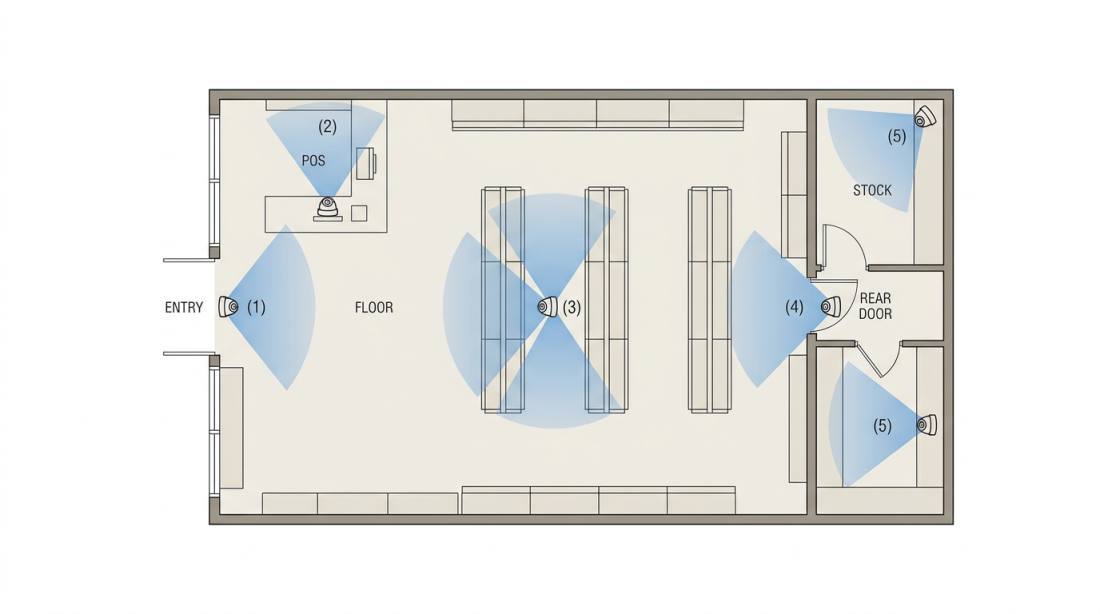
Most retail stores use the same five or six camera positions, because the pinch points are consistent across nearly every single-shopfront store.
Front entry. The single most useful position. A camera framed on the door captures every customer entering and leaving at identification quality, plus an overview of the immediate footpath.
Point of sale. A camera framed over the register captures transactions, refunds, cash handling and staff-customer interactions. This position is non-negotiable in any store handling cash or high-value items.
Main shop floor. One or two overview cameras covering the main aisles and product displays. Mount these high enough to see the whole floor in a single frame rather than trying to zoom on any specific area.
Rear / service door. A camera covering the back-of-house entry catches staff deliveries, after-hours access and the bin compactor — a classic goods-out diversion point. Missing this camera is one of the most common retail CCTV mistakes.
Stock room. An overview camera in the stock or receiving area captures inbound deliveries and stock handling. Useful during stocktake reviews.
High-value zones. Stores selling phones, electronics, liquor, jewellery or cosmetics typically add a tighter-framed camera over the specific aisle or display. Framing matters more than megapixel count here.
Mounting height is commonly 2.6 to 3 metres, high enough to be out of easy reach but low enough to keep faces identifiable. For general placement guidance in other environments, see the CCTV placement guide for schools and childcare.
How Many Cameras Does a Retail Store Need?
Most retail stores land cleanly in one of three configurations, and buying the right size up front is much cheaper than replacing the NVR a year later.
- Small shop (4 cameras): a compact store under 80 m² — a single-room boutique, a service kiosk or a small cafe-retail hybrid. 4 cameras cover the entry, POS, shop-floor overview and rear door. A 4 camera system on a 4 channel NVR fits, but 4 cameras on an 8 channel NVR is the smarter buy because it leaves room to grow.
- Standard retail store (6 to 8 cameras): the typical single-shopfront store. Front entry, POS, two shop-floor overviews, a back door, a stock room and one high-value zone. 6 camera systems on an 8 channel NVR and 8 camera systems on an 8 channel NVR are the most commonly specified retail configurations.
- Larger store / trade counter (10 to 16 cameras): a bigger footprint, a trade counter with warehouse space, or a boutique with multiple rooms. 16 channel systems with 8 to 10 cameras or 16 channel systems with 10 cameras are the usual landing point.
Rule of thumb: whatever the camera count, size the NVR one tier above it. Spare PoE ports are cheap to buy and expensive to retrofit later.
Why 8 Channel NVR Systems Are Standard
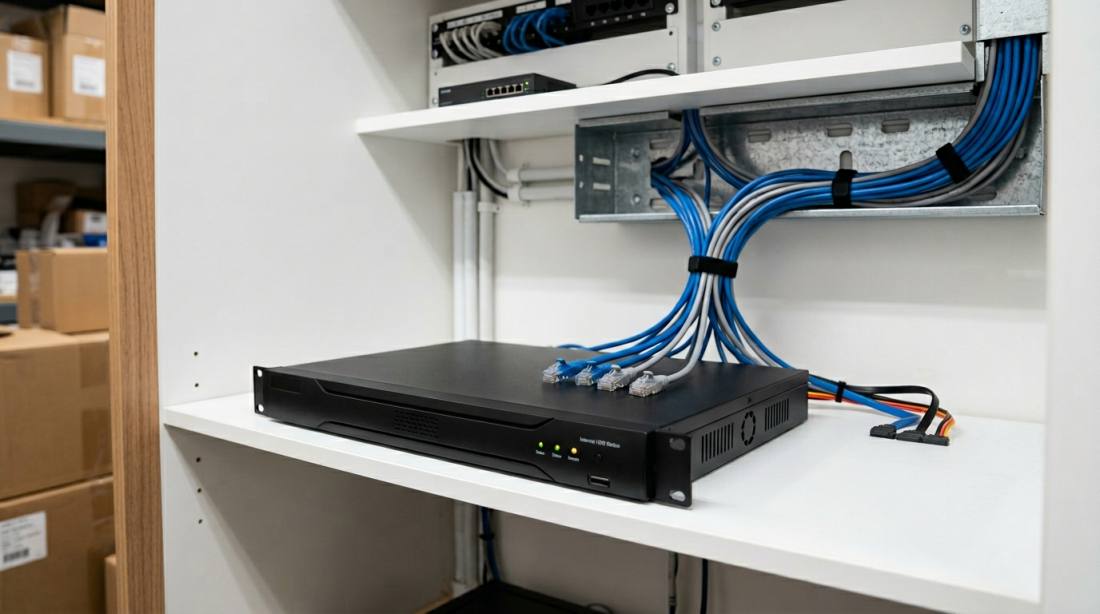
The 8 channel NVR is the default recorder across Australian retail for a simple reason: it matches the camera count most stores actually deploy, with spare PoE ports for expansion.
A standard retail store runs 6 cameras. Eight channels leaves two spare PoE ports, which is enough to add a camera as the layout changes — a new stockroom angle, a second display camera, or coverage of a renovated back-of-house area.
Adding a camera to a PoE system is plug-and-play: run a Cat6 cable, connect the PoE port, the NVR auto-registers the device. The price gap between an 8 channel NVR and a 4 channel NVR is small. The gap between an 8 channel NVR and having to replace a full system at camera number 5 is much larger.
Sixteen channel NVRs are the right choice at 10+ cameras — larger stores, trade counters and multi-room boutiques. For most single-shopfront retail stores, 8 channels is the efficient answer. Compare options on our NVR recorders page, or read our best NVR for 8 camera systems guide for a deeper look at channel planning.
Why Wired (PoE) CCTV Systems Are Preferred
Wired PoE is the default architecture for retail CCTV in Australia. The reliability gap between wired and wireless is substantial, and it shows up in exactly the moments retail footage matters most.
A PoE camera has one Cat6 cable back to the NVR carrying both power and video. There is no Wi-Fi contention, no battery cycle and no cloud dependency. The NVR records continuously to a surveillance-grade drive on a local network regardless of internet status.
Wireless cameras compete for bandwidth with every other device on the store's Wi-Fi — EFTPOS, staff phones, customer traffic, music streaming. Under contention, wireless cameras reduce bitrate dynamically. That is the exact moment a theft or dispute happens, and the recording quality drops right when it matters.
Battery-powered cameras are designed for motion snapshots, not continuous recording. Retail needs unbroken timelines across trading hours. Batteries flat, or a motion trigger that fires too late, produces a gap in exactly the window being reviewed.
Wired PoE also simplifies the service story over multiple years: one recorder, one surveillance drive, one firmware path. For a fuller comparison, see our wired vs wireless CCTV guide.
Camera Types for Retail
Domes and turrets are the common indoor choice for retail. The form factor is tidy, flush to the ceiling, and the wide viewing angle captures most of a shop floor or aisle from a single position. Turrets hold colour night footage well with a larger-aperture lens — useful for after-hours coverage without switching to IR.
Bullets are more often used outside — over the front entry on an awning, above a rear door or across a carpark. The longer housing carries a longer IR range and the visible barrel acts as a general deterrent.
Resolution. 4 MP (2560×1440) is the sweet spot for retail. It delivers enough facial detail at the entry and enough POS detail to read receipts without inflating storage demand. 2 MP (1080p) is acceptable only for overview positions. 8 MP/4K cameras are specified selectively on high-value zones where a tight zoom matters.
Browse the IP cameras range to compare dome, bullet and turret options side by side.
Storage & Recording
Thirty days is the standard retail retention target. Most disputes, chargeback investigations and internal reviews surface within that window, so 30 days of footage is the practical baseline.
A 6 camera retail system at 4 MP on motion-weighted recording typically hits 30 days on a 4 TB surveillance-grade drive. Continuous 24/7 recording uses roughly 40 to 50 per cent more space — so a 6 TB drive is the comfortable fit where unbroken timelines across trading hours matter most.
Many retailers run a hybrid: continuous on the entry and POS cameras where unbroken footage is most useful, motion-weighted on the shop-floor overview cameras where only movement matters.
Always use surveillance-grade drives (WD Purple, Seagate SkyHawk) designed for 24/7 write workload. Consumer desktop drives fail well ahead of their rated life in an NVR.
Recommended CCTV Systems
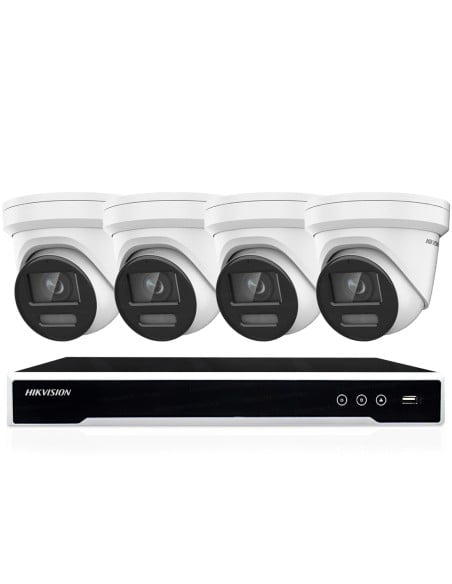
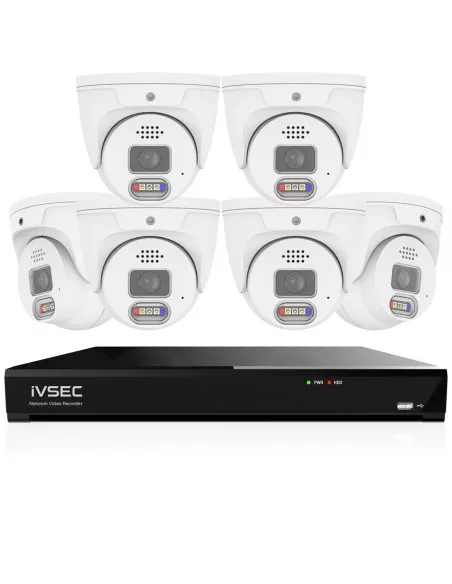
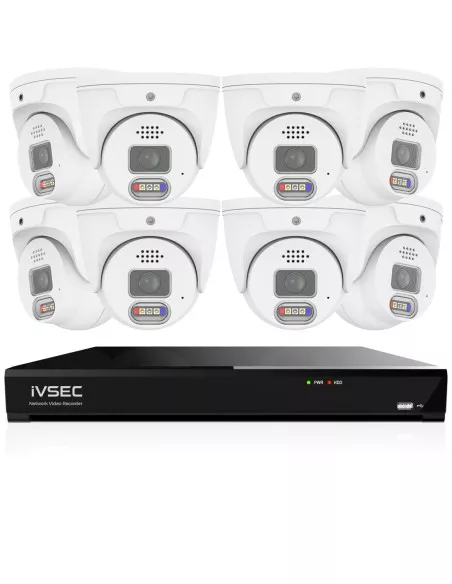
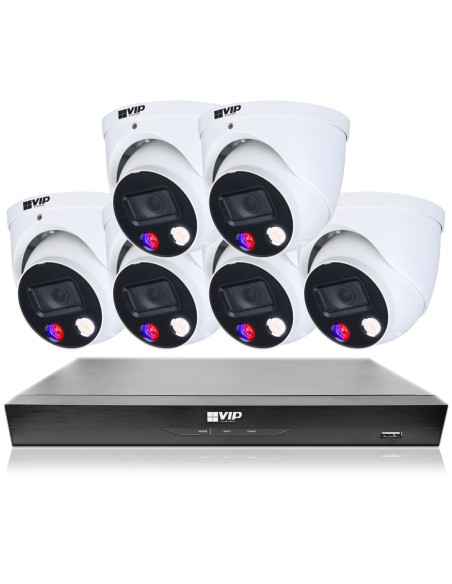
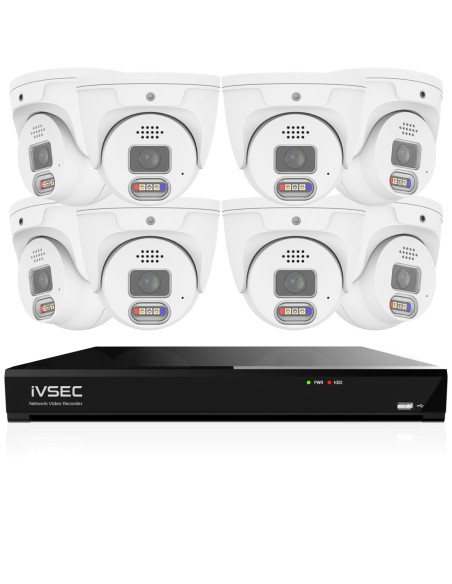
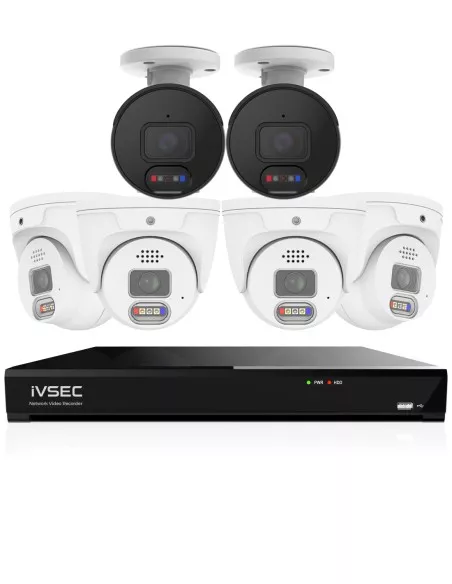
Mid-range retail CCTV kits from $1,500 to $5,000 retail — 6 to 8 camera PoE systems on 8 channel NVRs, the configuration most Australian retail stores actually run. Live pricing and stock.
Complete wired PoE kits biased toward 6 and 8 camera configurations on 8 channel NVRs — the configuration most Australian retail stores actually run.
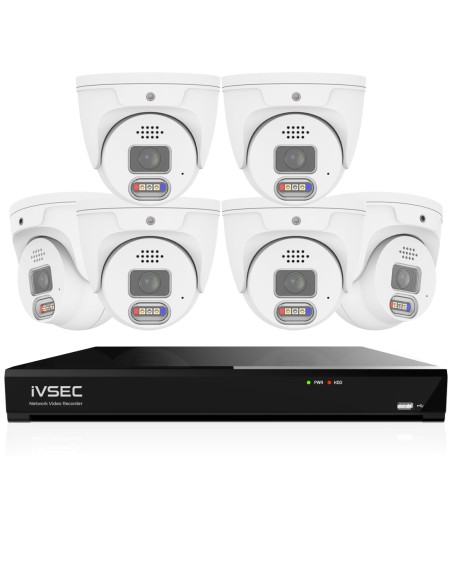
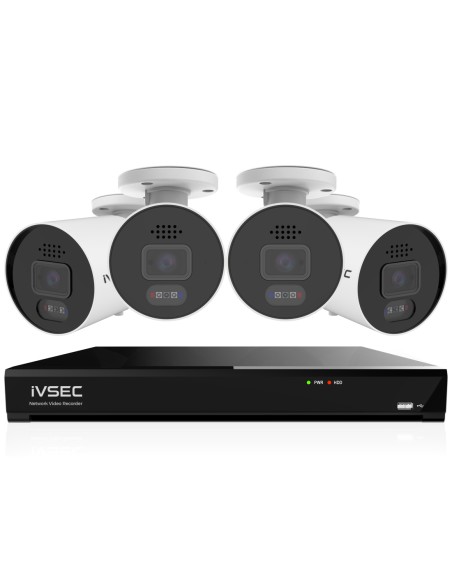
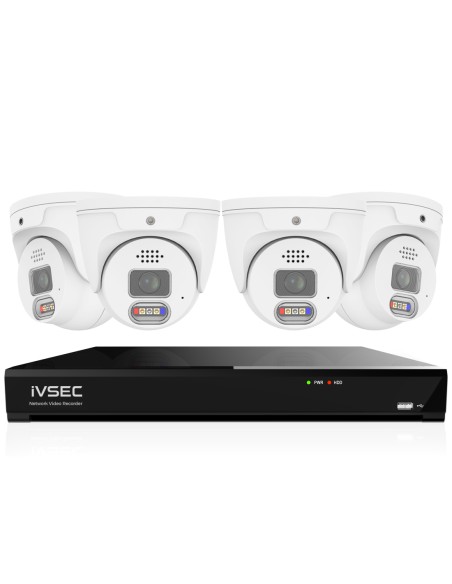
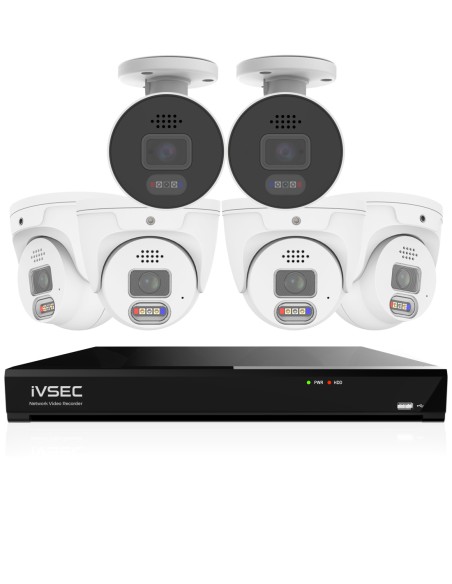

Choose Your System
Pick a system by channel count and camera count:
- 4 Camera Systems – Small Shops
- 8 Channel / 4 Camera Systems
- 8 Channel / 6 Camera Systems (Recommended)
- 8 Camera Systems
- 16 Channel Systems
- 16 Channel / 10 Camera Systems
Retail CCTV System Cost Guide
Entry
$800–$1,500
4 to 6 camera wired PoE kit on an 8 channel NVR. Small shops, cafes, service kiosks.
Most Popular
Mid-Range
$1,500–$5,000
6 to 8 camera PoE system on an 8 channel NVR with a surveillance-grade drive. The tier most Australian retail stores actually run.
Larger Stores
$5,000+
10 to 16 camera configurations on 16 channel NVRs with dual-drive storage. Larger stores and trade counters.
Common Mistakes
Missing the rear door
Back-of-house and service doors are classic gaps. Coverage of the rear door catches after-hours access and goods-out diversions.
Skipping the POS camera
A camera framed over the register is the highest-ROI position in any retail store. Deploying without it leaves refund, void and cash-handling disputes unresolvable on footage.
Going wireless across the store
Wi-Fi cameras share bandwidth with EFTPOS, customer Wi-Fi and staff devices. Frames get dropped at the busiest moments — exactly when footage is needed.
Under-sizing the NVR
A 4 channel NVR is full at 4 cameras. Spending an extra hundred dollars on an 8 channel NVR leaves spare PoE ports for future cameras.
Using consumer hard drives
Consumer drives fail fast in continuous-write NVR workload. Always specify surveillance-grade drives (WD Purple, Seagate SkyHawk).
This guide provides general information on CCTV systems commonly used in retail environments. Requirements may vary depending on your location and premises, so always ensure your system is used in accordance with local regulations.
Frequently Asked Questions
What is the best CCTV system for a retail store?
Most Australian retail stores are best served by a 6 to 8 camera PoE system on an 8 channel NVR. The configuration covers the front entry, the point of sale, the main shop floor and the rear/service door with spare PoE ports for expansion.
How many cameras does a retail store need?
A small shop under 80 m² is typically covered by 4 cameras. A standard retail store lands on 6 to 8 cameras. Larger stores, trade counters and multi-room boutiques commonly run 10 to 16 cameras.
Why is an 8 channel NVR standard for retail?
Eight channels match the camera count most stores actually deploy and leave two spare PoE ports for future expansion. It is cheaper than a 16 channel NVR and enough for almost every single-shopfront retail site.
Should retail stores use wireless cameras?
Wireless cameras are not recommended for a whole-of-store deployment. Wi-Fi contention, battery cycles and cloud dependencies lead to dropouts at exactly the moments footage matters. Wired PoE on a local NVR is the standard.
Where should cameras be placed in a retail store?
The common placements are the front entry, the point of sale, one or two overview angles across the shop floor, a back-of-house/service door camera, and a stock room angle. Cameras should be framed for identification at the entry and POS.
What resolution is best for retail CCTV?
4 MP (2560×1440) is the sweet spot. It delivers enough facial detail at the entry and POS without inflating storage. 8 MP/4K is used selectively on higher-value zones where a tighter zoom matters.
How long should retail CCTV footage be stored?
Thirty days is the common retail baseline. Most disputes, chargeback investigations and internal reviews surface within that window. A 6 camera system at 4 MP typically hits 30 days on a 4 TB surveillance drive.
Do retail CCTV systems need internet?
No. A wired PoE system records continuously to the local NVR regardless of internet status. Internet is only required for remote viewing, push notifications or optional cloud backup.
Can CCTV cover the cash register / POS area?
Yes, and it is one of the highest-value camera positions in any store. A camera framed over the POS captures transactions, refunds, voids and staff interactions — useful for both loss prevention and customer dispute resolution.
Can a retail CCTV system be expanded later?
Yes, up to the NVR's channel capacity. Adding a camera to a PoE system with spare ports is plug-and-play: run a Cat6 cable, connect the PoE port, and the NVR auto-registers the camera.
Can CCTV help reduce shrinkage and theft?
Visible professional CCTV has a documented deterrent effect against opportunistic theft. Footage is also frequently the deciding piece of evidence in staff theft and chargeback disputes, which is why most retail operators specify 30-day retention.
Is wired PoE really better than wireless for retail?
For continuous recording and long-term reliability, yes. Wired PoE cameras run on a dedicated cable with no Wi-Fi contention, no battery cycle and no cloud dependency. See our wired vs wireless CCTV guide for a fuller comparison.
Running a cafe, office or trade counter rather than a retail store? See our best CCTV system for small business guide. Planning a home install? See our best CCTV system for home guide. For a deeper comparison of the architecture choice, see wired vs wireless CCTV. For a deeper dive on the recorder, read our best NVR for 8 camera systems guide. Otherwise, browse complete CCTV systems, NVR recorders and IP cameras.
Ready to secure your store?
Find the right 6 to 8 camera PoE kit for your shop — every system ships Australia-wide with local warranty and support, and scales cleanly as your store grows.