Most Australian childcare centres are best served by a wired PoE CCTV system on an 8 or 16 channel NVR. The common layout covers the main entry and sign-in area, reception, shared corridors, one or two indoor common play areas that are already open and visible, and an outdoor common play area. Centres choose wired PoE because the system records continuously to a local NVR on a closed network, does not depend on Wi-Fi, and keeps running the day the internet drops out. For a calm, reliable long-term install, see our wired vs wireless CCTV guide. Small single-room centres often start with a 4 to 6 camera kit; most multi-room centres land on 8 to 10 cameras with some spare PoE ports for expansion. This guide walks through coverage areas, camera types, NVR sizing, storage planning and how to choose a system that will still suit the centre in five years.
At a glance
Best overall:8 camera PoE CCTV system on a 16 channel NVR
Smaller single-room centre:4 to 6 camera PoE kit on an 8 channel NVR
Larger multi-zone centre:12 to 16 camera PoE system on a 16 channel NVR
Architecture:Wired PoE cameras + local NVR recording
Why Childcare Centres Usually Choose Wired CCTV Systems
Centres rarely run a CCTV system for a week; they run it for years. That length of operation is where wired PoE pulls ahead of wireless. A wired system has a single Cat6 cable from each camera to the NVR carrying both power and video, so the recording does not depend on the office Wi-Fi, a vendor cloud service or a rechargeable battery. The NVR writes continuously to a surveillance-grade hard drive on a local network, which means the day the internet drops, the router is swapped, or a firmware update is rolling out, the system keeps recording.
That matters in a childcare environment because the periods you most want recorded — morning arrival, afternoon pickup, lunch, nap transitions — are also the busiest periods on the site's Wi-Fi network. Staff phones, tablets, parent check-in devices and point-of-service terminals all share the same radio space. Wireless cameras sitting on that same network tend to reduce bitrate dynamically to cope with contention, which is the exact moment image quality matters most. A wired PoE camera on a dedicated cable is unaffected by any of that.
There is also a practical maintenance angle. Most centres run one or two NVRs for years, service the surveillance drive every couple of years, and add a camera or two as the layout changes. That is a simple maintenance story for staff to manage. A fleet of wireless cameras with different battery cycles, different app logins and different firmware update paths is a much harder system to keep operational across several years of turnover. For a deeper comparison, see our wired vs wireless CCTV guide.
Common CCTV Coverage Areas in Childcare Centres
Coverage decisions vary by site and should reflect the centre's privacy approach, but the common placements across the centres we supply are reasonably consistent. The starting point is almost always the main entry and sign-in area: this is the single busiest pinch point on the site, and a well-framed camera at the door captures general approach, identification-quality imagery at the counter, and a secondary overview of the reception. Many centres pair that with a second camera inside reception framed towards the desk and back office.
From there, coverage typically extends to shared corridors — the general movement routes between rooms — and into indoor common play areas that are already open and visible. The goal is situational awareness across spaces where adults and children move together through the day, not close monitoring of individuals. Indoor cameras are usually turrets or domes mounted flush to the ceiling, with a wide lens that captures the full room rather than trying to zoom on one corner.
Outside, coverage commonly includes the external approach to the front gate, the outdoor common play area, and key entry and exit points around the building. Bullet or turret cameras under the eaves are the usual choice for these runs because they handle weather, deliver a longer IR range after hours, and remain visible as a general deterrent. Sites with a car park or dropoff lane often add a camera framed across that space for general movement coverage.
Sensitive spaces are not monitored. Bathrooms, nappy-change rooms, counselling rooms and staff rest areas are excluded from coverage — placing cameras in those spaces is not consistent with standard privacy expectations on a childcare site. Camera placement decisions should always be made with your operator policy, state surveillance considerations and privacy settings in mind. For general background on placement considerations, see our CCTV placement guide.
How Many Cameras Does a Childcare Centre Need?
Camera count scales with the layout, not the brand. Most centres land cleanly in one of three configurations, and buying the right size up front is far cheaper than replacing the NVR a year later.
Small single-room centre (4 to 6 cameras): a compact centre with one main play area, a reception and a small outdoor space. Cameras typically cover the main entry, one indoor common area, the reception and one or two outdoor angles. A 4 camera system on an 8 channel NVR or 6 camera system on an 8 channel NVR fits this size comfortably.
Standard multi-room centre (8 to 10 cameras): a typical centre with several rooms, shared corridors, indoor and outdoor common areas and a defined reception. This is where most centres settle — 8 camera systems on an 8 channel NVR work, but 8 camera systems on a 16 channel NVR are the more common specification because the spare PoE ports leave room to add a camera as the layout changes.
Larger multi-zone centre (12 to 16 cameras): a bigger site with multiple indoor spaces, a larger outdoor common area, a car park, a dropoff zone and sometimes a separate administrative office. 16 channel systems with 10+ cameras are appropriate here, with the NVR sized to accept further expansion.
A reliable rule of thumb: whatever the headline camera count, size the NVR one tier above it. An 8 channel NVR is full at 8 cameras; a 16 channel NVR on an 8 or 10 camera deployment leaves real headroom and is much cheaper than replacing the recorder later. Centres commonly add a camera as the outdoor space changes, a new entry is added or a shared area is reconfigured, and spare PoE ports make that a plug-and-play job.
Dome vs Bullet Cameras for Childcare Environments
Camera choice mostly comes down to where each one is mounted. Domes and turrets are the usual pick for indoor common areas, corridors and reception. The form factor is tidy, the viewing angle is generally wide, and the housing fits flush to a ceiling which keeps it visually low key. Turrets, in particular, hold up well in shared indoor spaces because they can be aimed precisely without the dome's slight cast around the lens.
Bullet cameras are more often used outdoors — under the eaves, on external walls and covering outdoor common play areas or the approach to the front gate. The longer housing carries a longer infrared range and the visible barrel acts as a general deterrent. IP66 or IP67 weather sealing is standard on outdoor models specified for Australian conditions. Turrets also work outdoors and are a common choice where a lower-profile housing is preferred.
Across the IP cameras range, 4 MP (2560×1440) is the sweet spot for both indoor and outdoor coverage in 2026. It delivers enough detail to identify a face at the entry or read the general context of a common area, without inflating storage demand the way 8 MP/4K cameras do. 2 MP (1080p) is acceptable for overview positions only.
Storage, NVR Size and Continuous Recording
Retention is a function of drive capacity, camera count and recording mode. A standard 8 camera centre recording at 4 MP on motion-weighted recording typically sits comfortably on a 4 to 6 TB surveillance-grade drive for a 30-day retention window. Thirty days is a common operational baseline for centre-level incident review, though some sites extend to 60 days depending on their internal processes and applicable state considerations.
Continuous 24/7 recording uses roughly 40 to 50 per cent more storage than motion-weighted recording. Many centres run a hybrid: continuous on the entry/exit and reception cameras where unbroken footage is most useful, motion on the common area cameras where only movement matters. Larger sites specify dual-drive NVRs so the drives can be sized for the target retention window without crowding the chassis.
Use surveillance-grade drives designed for continuous write workload (WD Purple and Seagate SkyHawk are the common choices). Consumer desktop drives are not built for the 24/7 duty cycle of an NVR and typically fail well ahead of their rated life. Compare drive-bay options on our NVR recorders page.
Recommended CCTV Systems
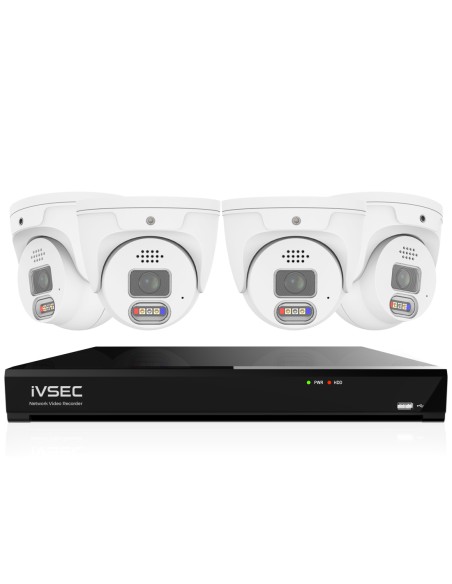
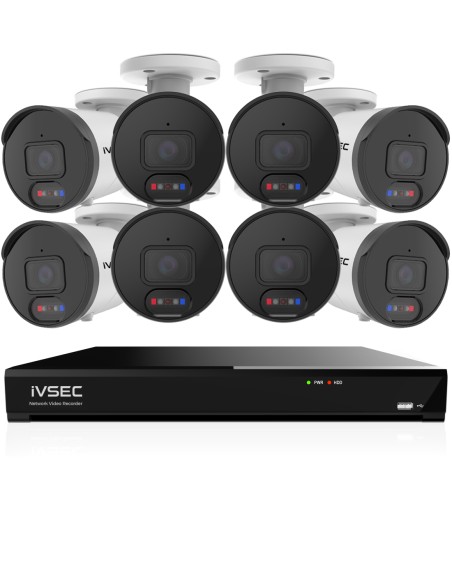
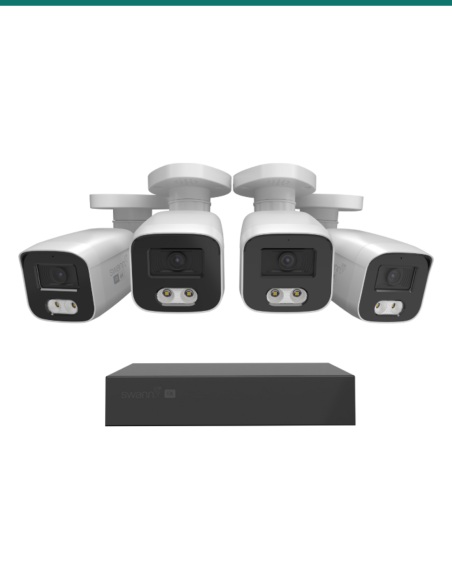
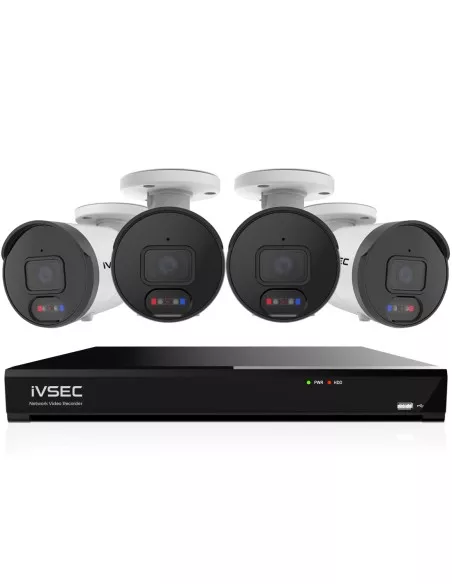
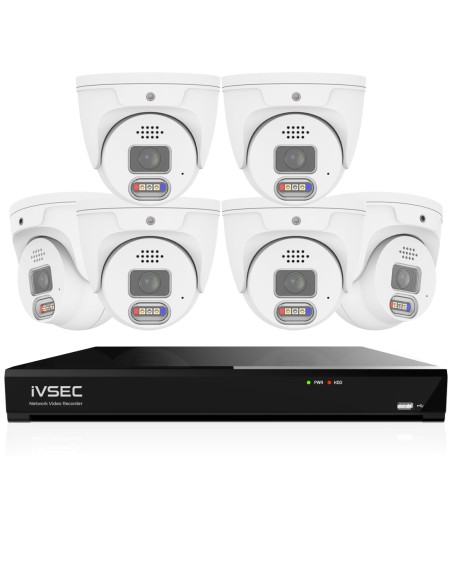
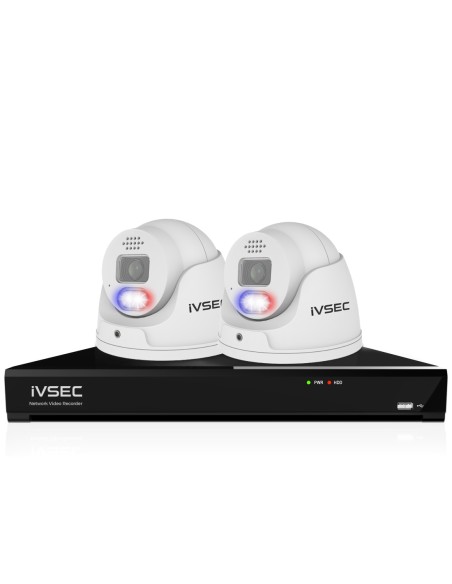
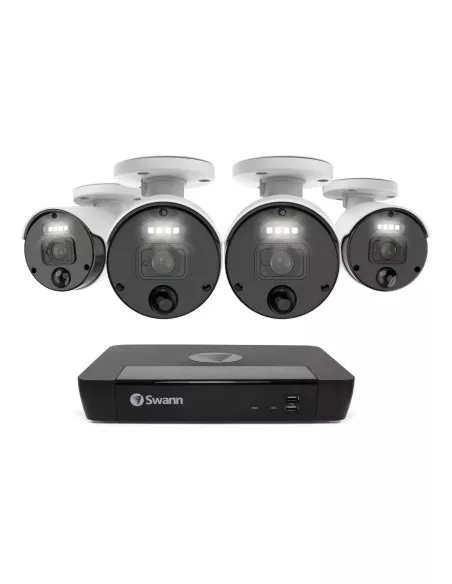
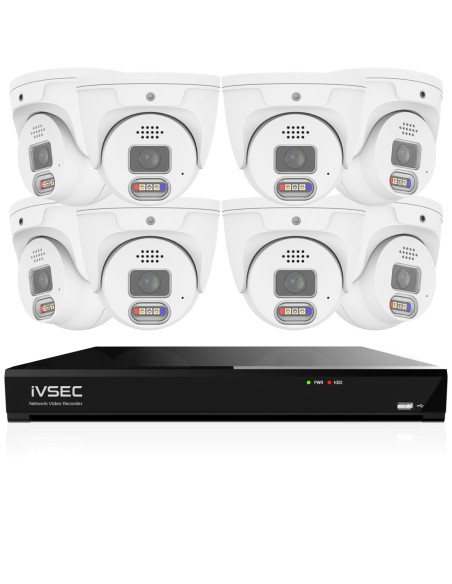
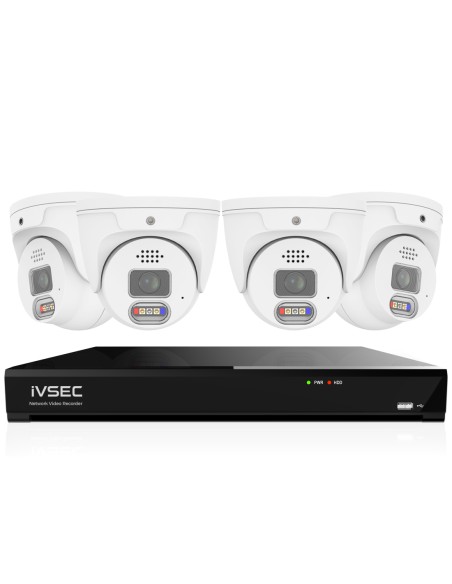
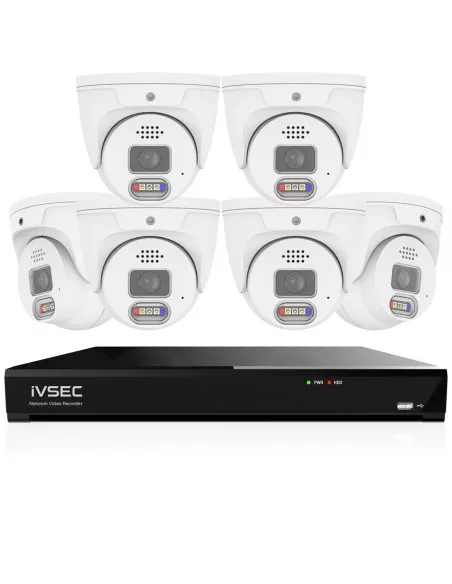
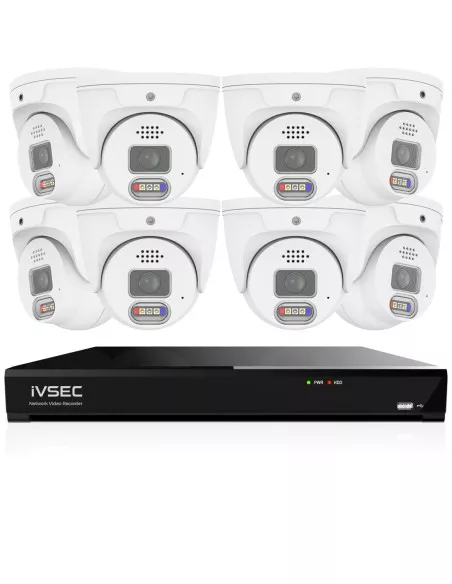
Our most popular wired PoE CCTV kits for Australian childcare centres — each bundle ships as a complete system (NVR, surveillance-grade drive and PoE cameras), with 8 and 16 channel options to match common centre layouts. Live pricing and stock.
These are complete wired PoE kits — NVR, surveillance-grade drive and PoE cameras shipped as one system. Selection is biased toward 8 and 16 channel systems because those are the configurations most Australian childcare centres actually deploy.
Why Most Centres Do Not Buy Battery or Cloud-Only Cameras
A centre is a long-running operation. Battery-powered cameras are designed for motion-triggered snapshots; they are not built for continuous recording, they have to be charged on a cycle, and they leave gaps during any event that starts before the motion trigger fires. Cloud-only cameras without local recording push every frame to a vendor service — useful for consumer households, but a real drawback on a site where the operator wants the recording sitting on a local NVR regardless of internet status.
The practical alternative is unglamorous and effective: a wired PoE system with a local NVR and a surveillance-grade drive. It records continuously, it survives an internet outage, and ownership of the footage stays with the centre. For most Australian operators this is the default and is very close to a solved problem.
What to Look For in a Centre CCTV System
Wired PoE architecture. One Cat6 cable per camera, power and video on the same cable, no Wi-Fi dependency.
Local NVR recording. Continuous or motion-weighted recording to a surveillance-grade drive, no forced monthly subscription to retrieve footage.
4 MP minimum resolution. 4 MP (2560×1440) delivers enough facial detail at the entry and enough context across common areas without inflating storage.
Sensible NVR sizing. Specify the next tier up from your current camera count so adding a camera is plug-and-play.
Australian warranty and firmware path. Local warranty, regular firmware updates and replacement parts available without a three-week overseas wait.
Free mobile app. Live view, playback, event timeline and push notifications with no recurring subscription charge.
This guide is general information on common CCTV system setups used in Australian childcare centres. Infront Technologies supplies CCTV hardware and complete kits; we do not provide licensed security consulting or on-site system design under a security licence. Requirements may vary by state and by site, and camera placement, retention and access decisions should always be made in accordance with your operator policy, the Privacy Act 1988 and the workplace-surveillance laws of your state. For site-specific installation and compliance advice, consult a suitably qualified installer or adviser where required.
Frequently Asked Questions
What is the best CCTV system for a childcare centre?
Most Australian childcare centres are best served by a wired PoE system on an 8 or 16 channel NVR. The configuration gives you continuous recording to a local hard drive, no reliance on Wi-Fi, and enough PoE ports to cover the reception, common play areas, main entry, and outdoor approach zones. For very small single-room centres a 4 camera kit may be enough; most centres settle on an 8 camera layout with some spare channels for future expansion.
How many cameras does a childcare centre need?
A small single-room centre typically needs 4 to 6 cameras. A standard multi-room centre with indoor and outdoor common areas usually runs 8 to 10 cameras. Larger multi-zone sites with several rooms, a separate reception, and a shared outdoor play area commonly use 12 to 16 cameras. Specifying a 16 channel NVR on an 8 to 10 camera deployment keeps spare PoE ports available for future additions without replacing the recorder.
Should childcare centres use wireless cameras?
Wireless cameras are generally not the right fit for a whole-of-centre CCTV system. They rely on Wi-Fi signal, are more prone to dropouts during busy periods, and many popular models buffer only short segments to local storage. Most centres prefer wired PoE because it delivers continuous recording on a dedicated cable. See our wired vs wireless CCTV guide for a fuller comparison.
What areas are commonly monitored in a childcare centre?
Common placements include the main entry and sign-in area, reception, shared corridors, indoor common play areas that are already open and visible, and outdoor common play areas. Coverage decisions vary by site and should be made with privacy considerations in mind; sensitive spaces such as bathrooms, nappy change rooms and staff rest areas are not monitored.
How long should childcare CCTV footage be stored?
Retention varies by centre and by state, but 30 days is a common baseline for operational and incident-review purposes. A standard 8 camera system at 4 MP on motion-weighted recording typically sits comfortably on a 4 to 6 TB surveillance-grade drive for 30-day retention. Continuous recording uses more space, so larger drives or dual-drive NVRs are common where longer retention is required.
Are PoE systems better for childcare centres?
Yes. Wired PoE systems are more stable, support continuous recording, and manage all cameras centrally through an NVR. A PoE cable carries both power and data, so each camera has a single, dedicated connection back to the recorder. That means fewer failure points than a Wi-Fi-based setup and easier long-term management for a centre operator.
Can CCTV cover outdoor play areas at a childcare centre?
Outdoor common play areas are commonly covered by one or more bullet or turret cameras under the eaves or on a dedicated pole, framed so that entry points and general movement are captured. IR-capable cameras provide useful coverage after-hours for site security. As with indoor coverage, outdoor camera placement is a general layout decision and should align with your site's privacy approach.
What is the best NVR size for a childcare centre?
An 8 channel NVR suits small centres running 4 to 6 cameras. Most medium centres do best on a 16 channel NVR — it fits the typical 8 to 12 camera install with spare PoE ports for expansion. Larger multi-building sites sometimes use a pair of 16 channel NVRs or a single 32 channel unit. Compare options on our NVR recorders page.
Can a childcare CCTV system be expanded later?
Yes, within the channel limit of the NVR. An 8 channel NVR accepts up to 8 cameras, a 16 channel NVR up to 16. Adding a camera is typically plug-and-play — run a Cat6 cable, connect the PoE port, and the NVR auto-registers the camera. If the site grows past the NVR's channel count, either add a second NVR or step up to a larger appliance.
Do centres usually use 8 channel or 16 channel systems?
8 channel systems are common for small single-room centres with limited indoor and outdoor coverage needs. 16 channel systems are the more typical choice for standard centres because they leave spare PoE ports for future expansion and accommodate mixed indoor and outdoor camera layouts. Many centres start on an 8 camera deployment on a 16 channel NVR for that reason.
Do CCTV systems in childcare centres need internet?
No. A wired PoE system records continuously to the local NVR regardless of internet status. Internet is only required for optional remote viewing from a phone, motion push notifications, or cloud backup. Many centres run the NVR on an isolated LAN so recording continues even if the office internet drops.
Find a complete wired PoE kit for your centre — each system ships Australia-wide with local warranty and support, and scales from 4 camera starters to 16+ camera multi-zone deployments.