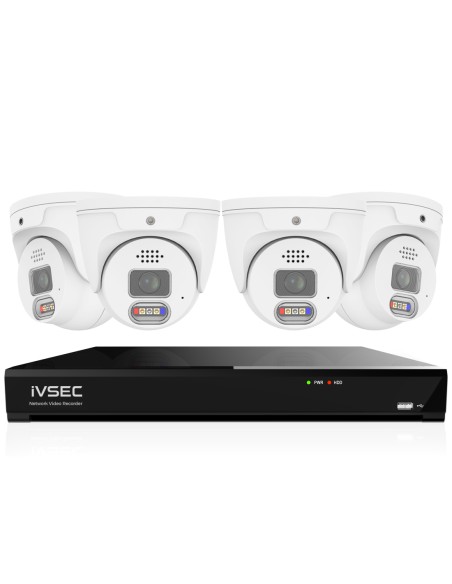
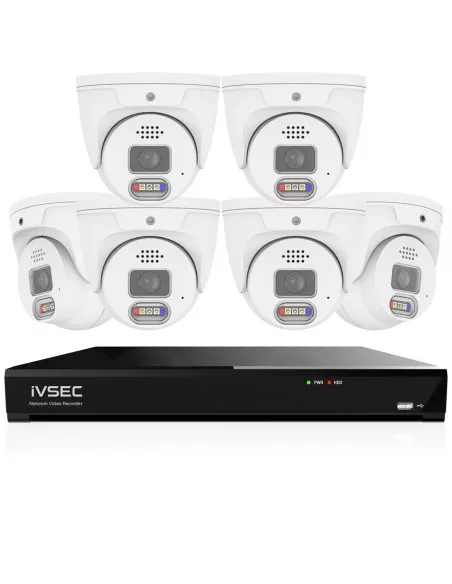
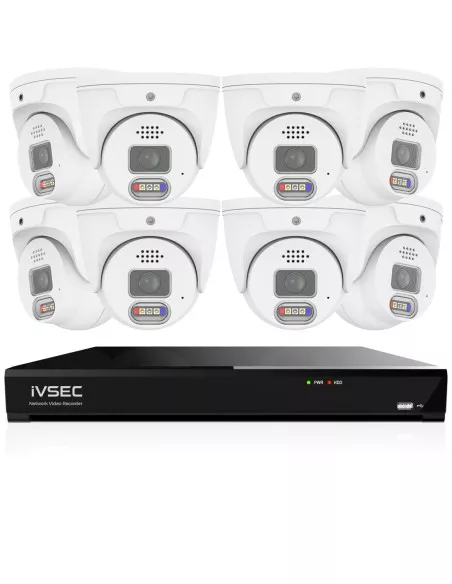
Most Australian schools run a wired PoE CCTV system on one or more NVRs, covering main entries and gates, admin and reception, shared corridors, the pickup and dropoff zone, and outdoor walkways between blocks. Sites at school scale favour PoE because each camera runs on its own Cat6 cable back to the NVR, and recording continues locally regardless of Wi-Fi status or internet availability. A small primary block commonly starts at 8 to 12 cameras on a 16 channel NVR; standard K–12 campuses typically run 20 to 30 cameras across paired 16 channel NVRs or a single 32 channel appliance. This guide covers coverage planning, camera sizing, outdoor and indoor camera choices, storage and expansion — the decisions that keep a school system useful five years after commissioning. For background on the architecture choice, see our wired vs wireless CCTV guide.
At a glance
Small primary / single block:8 to 12 camera PoE system on a 16 channel NVR
Standard primary / secondary:12 to 20 camera PoE system on a 16 channel NVR
Larger multi-block site:20 to 30+ cameras on paired 16ch NVRs or a 32ch appliance
Architecture:Wired PoE cameras + local NVR recording
Schools operate across a larger site than most commercial buildings — several blocks, long external runs between buildings, car parks, drop-off zones, outdoor common areas and a main administration block. At that scale, the architecture that works predictably is wired PoE on a local NVR. Each camera has a single Cat6 cable carrying power and video back to the recorder, which keeps the recording on the school's network and independent of Wi-Fi signal strength, external internet or any vendor cloud service.
Reliability is the main reason schools favour wired systems. Campus Wi-Fi is a busy radio environment — hundreds of devices across classrooms, laptops, tablets, phones and building services. Wireless cameras sitting on that same network typically reduce bitrate dynamically to cope with contention, which is the exact moment image quality matters most. A wired PoE camera on its own dedicated cable is unaffected by any of that. It records at its full native resolution — commonly 4 MP or 8 MP — at a steady frame rate, around the clock.
Central management is the second reason. A PoE system brings every camera back to one or two NVRs, typically housed in a secure comms cabinet in the admin block. That is a single place to service, a single place to pull footage from and a single retention policy to manage. Across a multi-year operation, that is dramatically simpler to keep running than a fleet of independently-configured wireless cameras with different firmware cycles, app logins and credential renewals.
Common CCTV Coverage Areas in Schools
Coverage decisions vary by site, but the common placements across the schools we supply are reasonably consistent. Most layouts start at the main entry and gates: the single most active pinch point on the site, and the best-framed camera opportunity for general situational awareness. A well-specified entry camera captures general approach, identification-quality imagery at the gate, and an overview of the adjacent footpath.
From there, coverage typically extends to the admin and reception area, shared corridors in and between blocks, and outdoor walkways that connect teaching areas. Many sites add coverage of the pickup and dropoff zone at the front of school for general movement awareness during the busy periods at the start and end of the day. Car parks are almost always covered — usually by a pair of bullet cameras framed across the space from opposite corners.
Outdoor common areas and shared recreation spaces are frequently covered where the layout supports unobtrusive placement. The goal is overview and incident review across general movement zones, not constant individual monitoring. Camera housings are commonly mounted under eaves or on dedicated poles at around 3 to 4 metres to sit well above reach while keeping framing useful.
Sensitive spaces are excluded from coverage. Bathrooms, change rooms, counselling rooms and staff-only rest areas are not monitored. Placement decisions should always reflect the school's operator policy, state workplace-surveillance rules and the Privacy Act 1988. For general background, see our CCTV placement guide.
How Many Cameras Does a School Need?
Camera count scales with site size and the number of blocks that need coverage. Most sites land in one of three configurations:
Small primary or single-block deployment (8 to 12 cameras): focused on the main entry, admin, reception, a small number of shared corridors and the front-of-school pickup zone. A 16 channel NVR with 8 cameras is the common spec because the spare PoE ports leave real room for expansion as the site grows.
Standard primary or secondary (12 to 20 cameras): an entry-and-gate pair, admin and reception, multiple shared corridors, a car park, the pickup and dropoff zone, and several outdoor walkway cameras. 16 channel systems with 10+ cameras are the usual landing point, commonly expanded over time to 16.
Larger multi-block campus (20 to 40 cameras): multiple teaching blocks, an administration block, shared outdoor areas, several car park zones, and extended perimeter coverage. Larger sites typically run paired 16 channel NVRs or a 32 channel appliance, both managed through a single interface.
Schools tend to outgrow their first system. Sites that started with a single 16 channel NVR and an 8 or 10 camera deployment frequently reach full NVR capacity within two or three years, as additional blocks are built, extra entries are added, or coverage expands into new outdoor areas. Specifying 25 to 30% spare PoE capacity at purchase is far cheaper than replacing the NVR two years later.
Camera Types for School Environments
Bullet cameras are the common outdoor choice — gates, car parks, external pathways, pickup zones. The longer housing carries a longer IR range (commonly 30 to 40 metres) which suits the larger external distances on a school site, and the visible barrel acts as a general deterrent. IP66 or IP67 rated housings are the standard for Australian outdoor deployment.
Turrets are useful where a lower profile is preferred — under eaves at block entrances, above admin doors, or in outdoor positions where a more discrete housing is the better visual fit. Turrets typically carry a 20 to 30 metre IR range and hold colour night footage well with a larger-aperture lens.
Domes are the usual indoor choice — reception, corridors, administrative foyers. The form factor is tidy and flush to the ceiling, and the wide viewing angle captures most of a shared corridor from a single position. Indoor cameras are generally specified at 4 MP (2560×1440) because that resolution delivers sufficient detail for corridor-scale framing without over-consuming storage. 8 MP/4K cameras are specified selectively on longer external runs where a tighter identification crop matters.
Why Wireless Cameras Are Usually the Wrong Fit for Schools
At school scale, wireless CCTV is rarely the right architecture. The distances between buildings are well beyond useful Wi-Fi range, the number of cameras saturates the available channels, and the school's Wi-Fi network is already busy carrying classroom and administrative traffic. A wireless camera cannot dedicate bandwidth the way a wired PoE camera does on its own cable; it has to share.
Continuous recording is the second issue. Many wireless cameras — especially battery-powered models — are designed for motion-triggered snapshots, not 24/7 recording. That is a poor match for a school environment where the value of the system is having an unbroken timeline across the busy morning, lunch and afternoon periods. A wired PoE system on a local NVR records continuously regardless of network conditions.
Wireless still has a narrow, supplementary role: a small standalone outbuilding with no practical cable path, or a short-term temporary setup. For the main school deployment, wired PoE is the default. See our wired vs wireless CCTV guide for a fuller comparison.
Recommended CCTV Systems
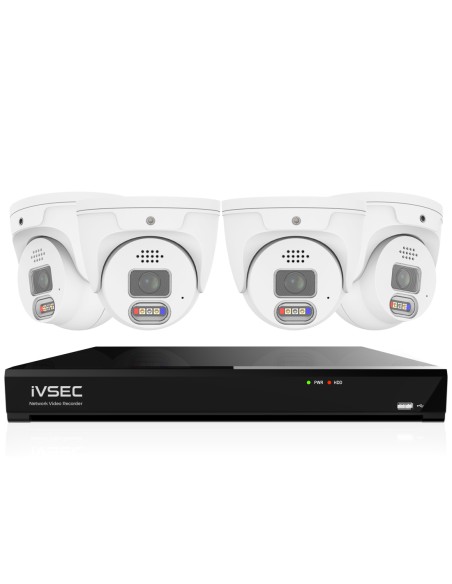
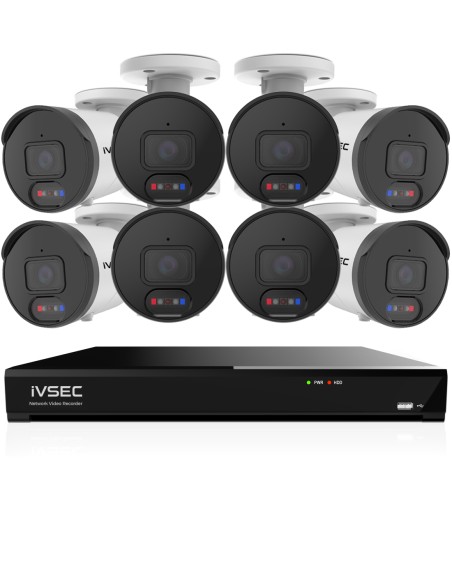
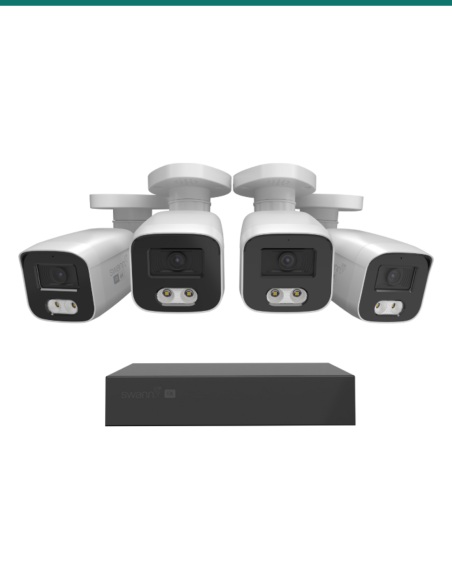
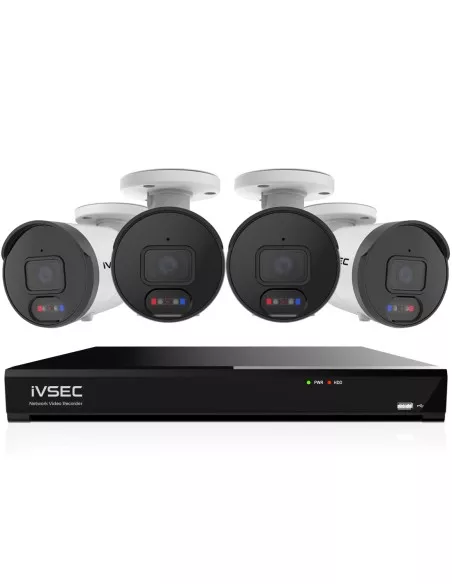
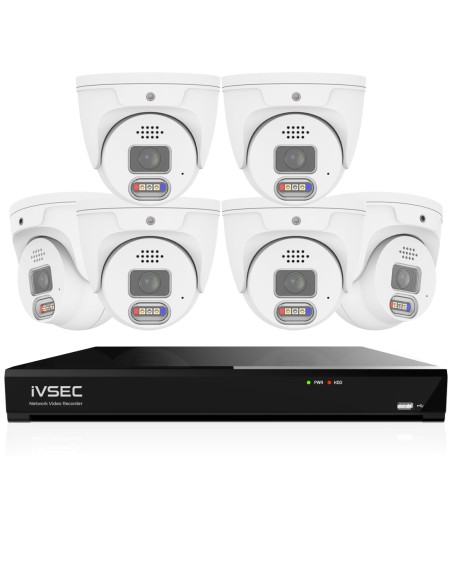
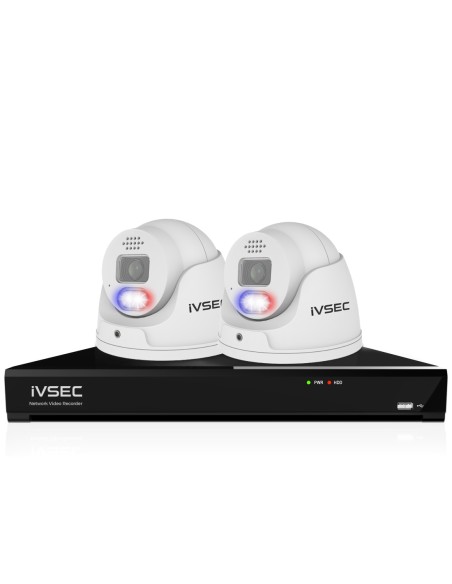
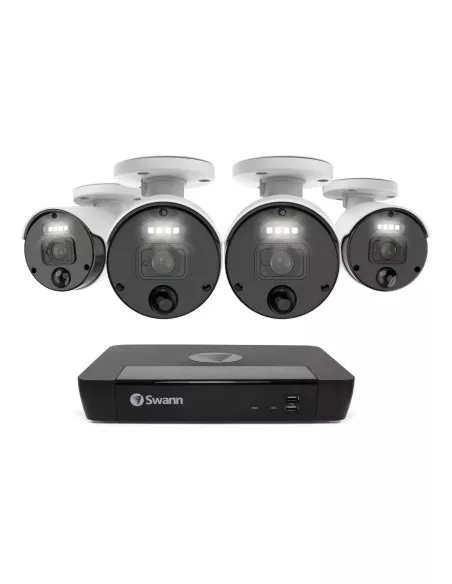
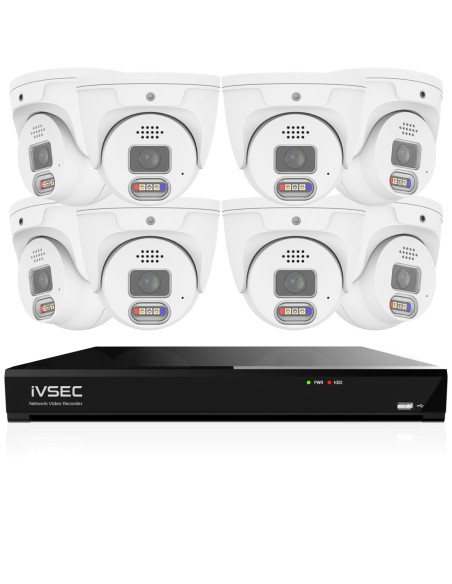
Our most popular wired PoE CCTV kits for Australian schools — each bundle ships as a complete system (NVR, surveillance-grade drive and PoE cameras), with 16 channel systems most commonly specified for block-level and campus deployments. Live pricing and stock.
Wired PoE kits biased toward 8 and 16 channel configurations. For larger multi-block sites, Infront Technologies supplies 32, 64 and 128 camera configurations on request — contact us directly for a quote on larger specifications.
Buying an 8 channel NVR for an 8 camera deployment leaves no room to expand. Specify the 16 channel recorder at day one — the price delta is small compared with replacing it two years in.
Using consumer drives
Consumer desktop drives are not built for 24/7 NVR workload. Use surveillance-grade drives (WD Purple or Seagate SkyHawk) sized for the target retention window.
Relying on Wi-Fi cameras across the campus
Wi-Fi cannot reliably carry a campus-scale CCTV load. Specify wired PoE back to a central NVR and keep the CCTV VLAN isolated from classroom traffic.
Mixing incompatible camera brands
Stick to one NVR vendor and a compatible camera range. Mixed brands complicate firmware updates, app logins and long-term maintenance.
Skipping the retention calculation
Work out drive capacity from camera count, resolution and recording mode before purchase. Retrofitting storage on a deployed NVR is more expensive than sizing correctly at day one.
This guide is general information on common CCTV system setups used in Australian schools. Infront Technologies supplies CCTV hardware and complete kits; we do not provide licensed security consulting or premises-specific system design under a security licence. Requirements may vary by state and by site, and camera placement, retention and access decisions should be made in accordance with your site's operator policy, the Privacy Act 1988 and applicable workplace-surveillance laws. For site-specific installation and compliance advice, consult a suitably qualified installer or adviser where required.
Frequently Asked Questions
What is the best CCTV system for a school?
Most Australian schools run a wired PoE CCTV system on one or more NVRs. A small primary site or single-building block is typically well served by a 16 channel NVR with 8 to 12 cameras; a standard K–12 campus usually runs paired 16 channel NVRs or a 32 channel appliance with 20 to 30 cameras, expanded as the site develops. The common theme is wired PoE, local NVR recording, and plenty of spare capacity at purchase.
How many cameras does a school need?
A small block-level deployment focused on entries, reception and shared corridors commonly starts at 8 cameras. A standard primary school with a main entry, admin block, corridors and outdoor common areas usually lands around 12 to 20 cameras. Larger secondary and multi-block sites often plan for 24 to 40 cameras spread across several NVRs. Schools tend to outgrow their first system, so specifying 25 to 30% spare PoE capacity at purchase is normal.
Are wireless cameras suitable for schools?
Wireless cameras are rarely the right architecture for a school site. The distances, building materials, network contention and number of cameras involved mean Wi-Fi-based systems struggle with reliability and continuous recording. Schools generally prefer wired PoE on a dedicated cable path back to a central NVR. Wireless may be reasonable only as a limited supplement in a difficult-to-cable outbuilding. For more, see our wired vs wireless CCTV guide.
What areas are commonly monitored in schools?
Common placements include main entries and gates, admin and reception, shared corridors, the front-of-school pickup and dropoff area, car parks, and outdoor walkways between blocks. Coverage decisions vary by site. Sensitive spaces such as bathrooms, change rooms and counselling rooms are not monitored.
Are PoE systems better for schools?
Yes. Wired PoE is the default architecture for school CCTV because it supports reliable continuous recording, central NVR management, and the long cable paths typical of campus sites. PoE also simplifies long-term maintenance: there is one cable per camera, one recorder to service, and no dependence on Wi-Fi or third-party cloud services.
Should schools use 8 or 16 channel NVRs?
16 channel NVRs are the common choice at school scale because they accommodate mixed indoor and outdoor camera layouts and leave room for future expansion. 8 channel NVRs suit small single-block deployments. Larger schools commonly run paired 16 channel NVRs or a single 32 channel appliance managed through a unified interface.
Can a school CCTV system be expanded later?
Yes, up to the NVR's channel capacity. Beyond that, most schools add a second NVR rather than replacing the first. Planning for expansion at purchase — larger NVR, spare PoE capacity, and sensible cable tray routes — is substantially cheaper than retrofitting later.
What type of cameras are best for outdoor school areas?
Bullet and turret cameras are the usual choice outdoors. Bullets are strong performers on long external runs — pathways, perimeter fence lines, car parks — because the longer housing typically carries a longer IR range. Turrets are useful under eaves and at building entrances where a tidier form factor is preferred. IP66 or IP67 rated housings are the standard for Australian outdoor deployment.
How long should school footage be stored?
Thirty days is a common operational baseline. Many schools extend to 60 or 90 days to accommodate incident review timelines and internal investigation processes. Retention is determined by NVR storage capacity, camera count and recording mode, so systems are typically specified with surveillance-grade drives sized for the target retention window.
What should schools look for in a CCTV system?
Wired PoE architecture, a local NVR for recording, surveillance-grade storage sized for the target retention window, spare channel capacity for expansion, and consistent camera specifications across the site for easier maintenance. Avoid mixing multiple incompatible camera brands on the same NVR and avoid systems that require a monthly cloud subscription to unlock core features such as extended storage or multi-camera viewing.
Do schools need internet for CCTV to record?
No. Wired PoE systems record continuously to a local NVR regardless of internet status. Internet is only needed for optional remote viewing, push notifications, or cloud backup. Many schools deliberately keep the CCTV network on an isolated VLAN so recording continues even when the main internet is down.
Find a complete wired PoE kit for your school — each system ships Australia-wide with local warranty and support, with 16 channel NVRs most commonly specified and 32 channel options available for larger campuses.