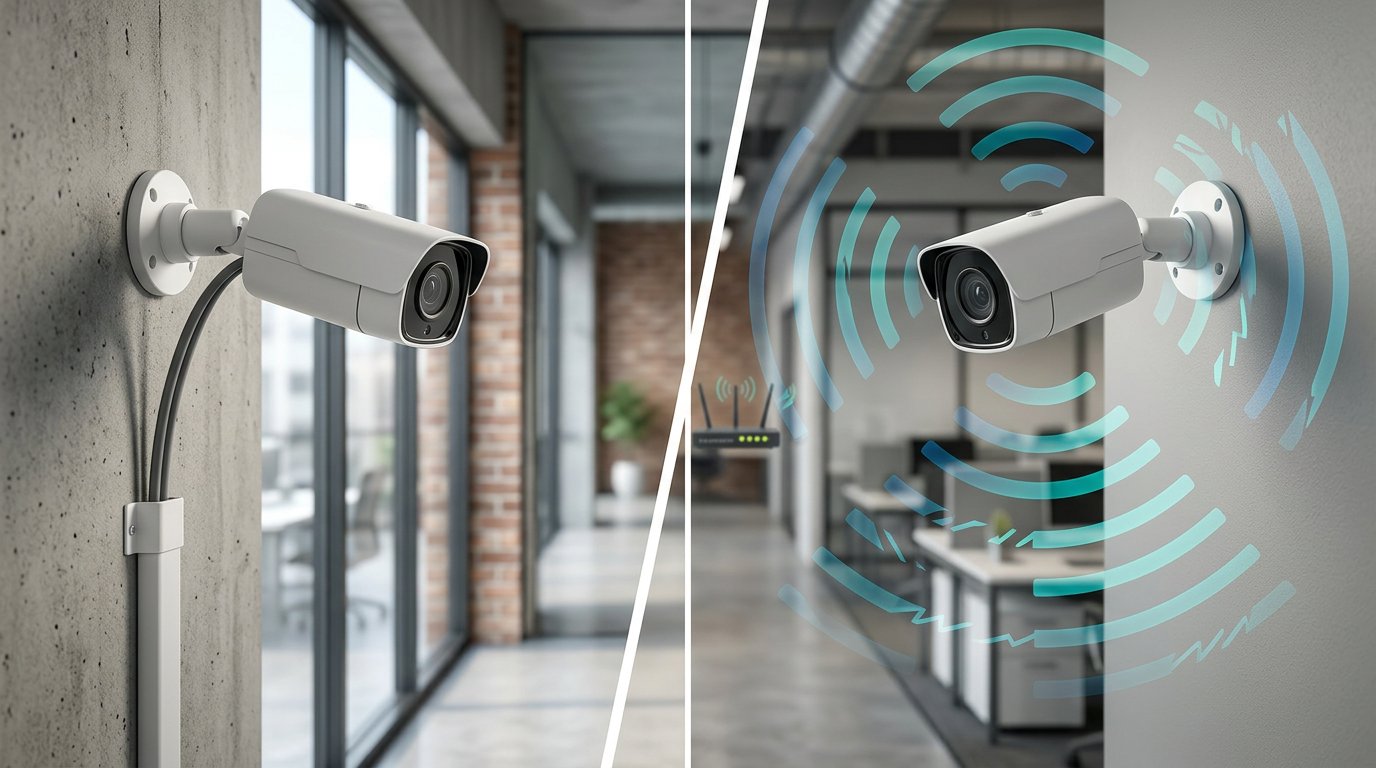
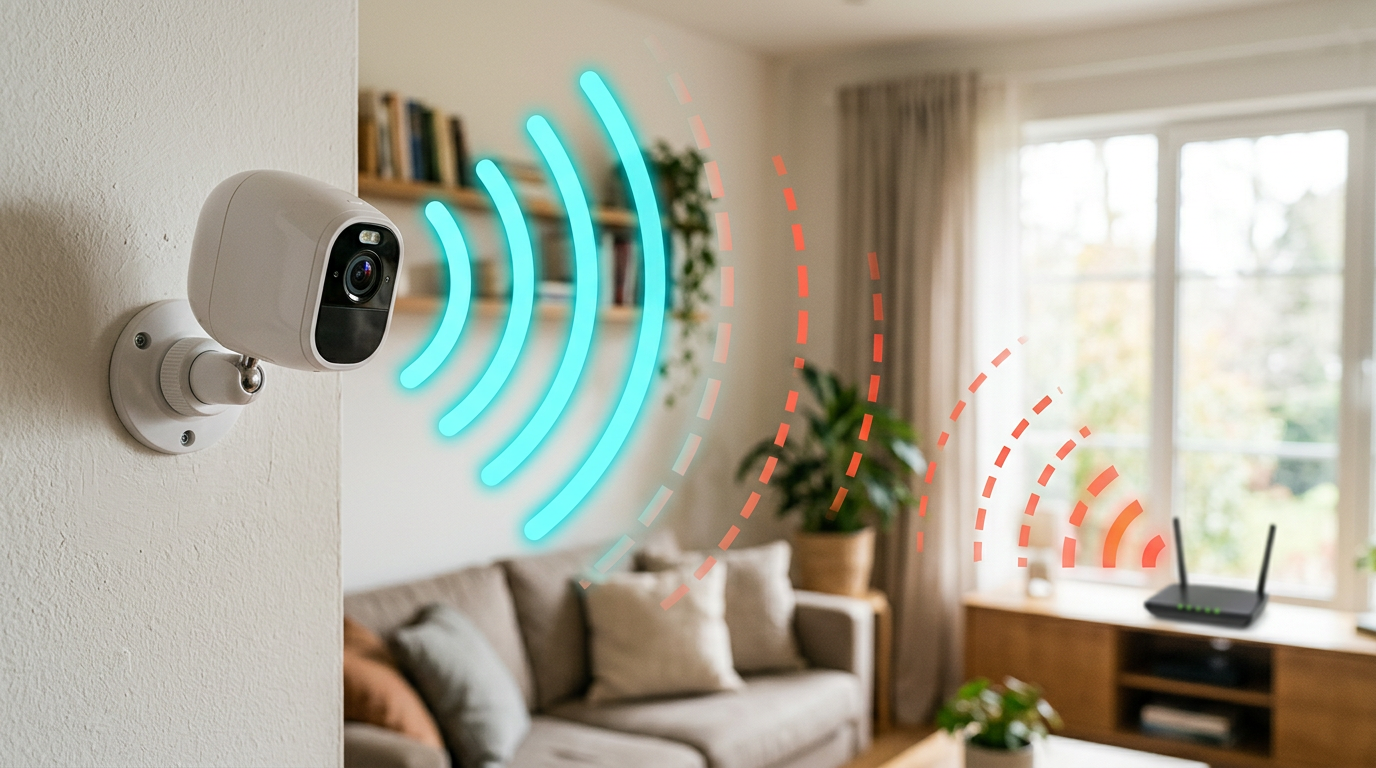
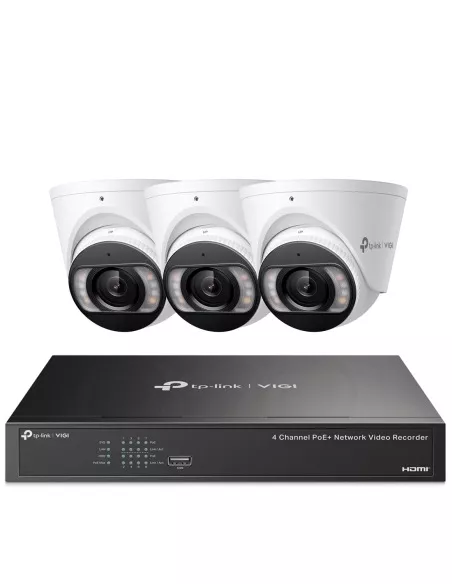
For most homes and businesses in Australia, wired CCTV systems are the preferred choice due to their reliability, stability and long-term performance. A great deal of the confusion around CCTV buying decisions comes from the way wireless cameras are marketed — sleek product photography, battery-powered convenience and “plug-and-play” setup language suggest the two formats are equivalent, but in a working installation they are not. Many online “top CCTV camera” lists focus on features, app ratings and unboxing impressions rather than how a camera performs over multiple years of continuous operation, which is the only measure that matters once a system is actually relied upon for security. In practice, wireless CCTV is positioned around convenience — quick setup, no cabling, flexible placement — while wired PoE CCTV is positioned around reliability — a dedicated connection per camera, continuous recording, local storage and predictable long-term behaviour. The rest of this guide explains exactly where that distinction matters, which architecture professionals select in real Australian projects, and the narrow situations where a wireless system still makes practical sense.
At a glance
Preferred architecture:Wired PoE with a local NVR
Recording style:Continuous, on surveillance-grade drives
A wired CCTV system delivers a consistent, dedicated connection between every camera and the NVR recorder. Each camera has its own Cat5e or Cat6 cable that carries both power and video, so no camera is sharing bandwidth, fighting for a radio channel or waiting its turn on a contested Wi-Fi network. That single design decision removes the most common cause of missed footage in real installations.
Because the connection is not radio-based, wired PoE cameras do not experience the short dropouts and frame-loss events that routinely affect wireless cameras during Wi-Fi congestion, router reboots and firmware updates. The stream reaches the NVR uninterrupted, is written continuously to surveillance-grade hard drives, and is available on demand — without a per-camera monthly fee or a cloud account holding the footage.
Continuous recording is the other advantage buyers underestimate. A wired PoE system can record every camera, 24 hours a day, seven days a week, for the full retention window — typically 14 to 30 days for homes and 30 to 90 days for businesses. Motion-triggered recording is optional on a wired system, not mandatory; on many wireless and battery systems it is unavoidable, because the camera simply cannot transmit continuously without flattening its battery or saturating Wi-Fi.
Most professional installations and long-term systems use wired PoE CCTV setups rather than wireless cameras. In Australian retail fit-outs, small offices, warehouses and long-term home builds, the architecture is almost always the same: PoE cameras cabled back to a local NVR in a locked comms cabinet, with remote viewing available through the manufacturer's secure app. This is the configuration most consistently found in sites that survive multi-year audits, insurance claims and evidential reviews without footage gaps — see how we recommend it for home systems and small business systems.
The Limitations of Wireless CCTV Systems
While wireless cameras are often marketed for convenience, they can be less reliable for continuous monitoring and long-term security. The limitations are not a matter of opinion — they are inherent to the way wireless systems transmit and store footage, and they appear consistently across brands and price points.
Wi-Fi interference. Wireless cameras share the 2.4 GHz and 5 GHz bands with phones, laptops, smart TVs, microwaves, baby monitors, bluetooth speakers and every other wireless device on the site. In dense apartment buildings, small offices and urban retail strips, those bands are already congested before a single camera is added. The result is intermittent image quality, delayed live view, and frames that fail to reach the recorder at all.
Signal dropouts and inconsistent recording. When Wi-Fi signal drops — a router reboot, a firmware update, a change of Wi-Fi password, an access-point swap — wireless cameras drop with it. Each dropout is a gap in footage. Even well-positioned wireless cameras typically experience short outages every week, and those outages almost always go unnoticed until footage is needed and the relevant window is missing.
Battery dependence. Many wireless cameras rely on a rechargeable battery for either primary or backup power, which introduces a new failure mode: the battery runs flat. Cold weather shortens battery life further, and cameras sited outside under eaves often drop to half their rated endurance. Recharging or replacing batteries on a regular cycle is real ongoing maintenance that wired PoE does not require.
Cloud reliance and subscription lock-in. A significant proportion of wireless cameras route footage through a vendor's cloud platform, which means the footage lives on someone else's server, the retention window is capped unless the operator pays a monthly subscription, and the vendor's service availability becomes part of your security posture. A wired system with a local NVR keeps footage on your own hardware, under your own physical control, with no ongoing fees — see our NVR recorders range for local-recording options.
What Most Installers and Businesses Actually Use
Strip away marketing, look at what is physically installed in Australian shops, offices, warehouses and well-specified homes, and a consistent pattern emerges. Wired PoE systems dominate real-world projects across the country, and the reason is operational rather than aesthetic: they work reliably without ongoing intervention.
In retail, a typical Australian shop or trade counter runs a wired 4 to 8 camera PoE system with a local NVR, covering the entrance, till, stock area and rear exit. In offices, the same architecture covers reception, open-plan work areas, server rooms and amenities. In warehouses — covered in detail in our warehouse CCTV guide — 16 cameras on a PoE system is the baseline, scaling to 32 or more for distribution centres and 3PLs. Across all three, the reason is the same: operators need footage they can rely on, weeks or months after an incident, without having to discover during review that the wireless link failed the night that mattered.
Wired PoE architecture is also the default for serious home installations. Owners who approach CCTV as a long-term purchase — not a weekend gadget — select a wired system because a Cat6 run through the roof space adds a small amount of labour at install time and removes years of reliability problems afterwards. Most Australian integrators quote wired as the standard and wireless as an exception for a specific constraint, not the other way around.
This is also consistent with how NVR-based recording is specified in professional environments. An NVR is purpose-built for continuous video write workload, supports surveillance-grade drives that are engineered for 24/7 operation, and consolidates every camera into a single, locally-controlled archive. A wired camera plugged directly into a PoE port on the NVR is the simplest possible architecture: one cable, one device, one storage pool.
Wired (PoE) CCTV Systems Explained
Power over Ethernet. A PoE CCTV system uses a single Cat5e or Cat6 cable to carry both power and video between each camera and the NVR. There is no separate power adapter at the camera end, no plug-pack under the eaves, and no risk of a failed battery. A PoE switch inside the NVR — or a separate managed PoE switch on larger sites — energises every camera and delivers its video stream back on the same cable. Runs up to 100 metres per camera are standard, and extenders handle longer distances where needed.
Direct connection to the NVR. Every camera plugs straight into its own port on the NVR (or the managed PoE switch feeding the NVR). That means each camera has a dedicated, uncontested link to the recorder — there is no shared bandwidth, no radio contention and no negotiation between devices. Adding a camera is a single cable pull and a plug-in; there is no Wi-Fi credential to configure at the camera end.
A stable system overall. Because the architecture is deterministic — cable in, power and video out — the failure modes are simple and testable. A camera is either cabled and online, or it is not. There is no intermittent “works most of the time” state. For long-term buyers, that predictability is the single biggest reason to choose wired PoE: a site that tests clean at commissioning will behave the same way twelve and twenty-four months later, with no surprise Wi-Fi re-authentication or firmware-driven signal issues.
No dependence on Wi-Fi. The CCTV network sits on its own wired subnet, entirely independent of the Wi-Fi used by staff, family, guests or smart-home devices. The cameras keep recording the day the router is replaced, the Wi-Fi password is changed or the internet connection drops, because none of those events touch the PoE link between the camera and the NVR. Remote viewing, when needed, still uses the internet — but the recording itself does not depend on it.
When Wireless CCTV May Be Suitable
Wireless CCTV is not a wrong choice everywhere — there are specific exception cases where it is the practical answer. In all of them, a wired PoE run is either physically impractical or disproportionate to the use case, and a wireless camera is the better compromise than no camera at all.
Apartments. Running cables back to a central NVR is often not permitted or not physically possible inside a strata-titled unit, and wireless is usually the only workable option. See our home CCTV guide for an apartment-specific section.
Rentals. Tenants typically cannot drill cable runs or install permanent wiring, so a battery-powered or Wi-Fi camera at the front door and one additional angle is a proportionate temporary solution.
Temporary setups. Pop-up stores, event venues, short-lease workshops and site offices that will relocate within months rarely justify a full wired fit-out. A small wireless kit travels with the operator and is sized for the risk.
Difficult cabling environments. Heritage-listed buildings, double-brick construction without a ceiling void, external granny flats across a driveway and outbuildings where trenching is not feasible are all genuine reasons to specify a wireless link for one or two cameras.
In each of these cases, buyers should go in with realistic expectations of the limitations covered above — Wi-Fi interference, occasional dropouts, battery maintenance and, often, a cloud subscription. Where those constraints are acceptable for the specific use case, wireless is a legitimate fit. Where they are not, a wired PoE system is the more dependable long-term option.
Wired vs Wireless — Direct Comparison
Wired (PoE) CCTV
Stable connection — dedicated Cat6 cable per camera, no radio contention.
Continuous recording — every camera, 24/7, for the full retention window.
No interference — independent of Wi-Fi congestion, microwaves or competing devices.
Local storage — footage on an NVR under your control, with no ongoing subscription fees.
Wireless CCTV
Easy setup — no cabling, connects to an existing Wi-Fi network.
Flexible placement — camera can be moved without a site revisit.
Dependent on Wi-Fi — signal strength, router uptime and network stability directly affect recording.
Dependent on batteries — many models require regular charging; cold weather reduces life further.
Often cloud-based — retention is typically capped and subscription-gated, with footage held on a vendor server.
Recommended CCTV Systems
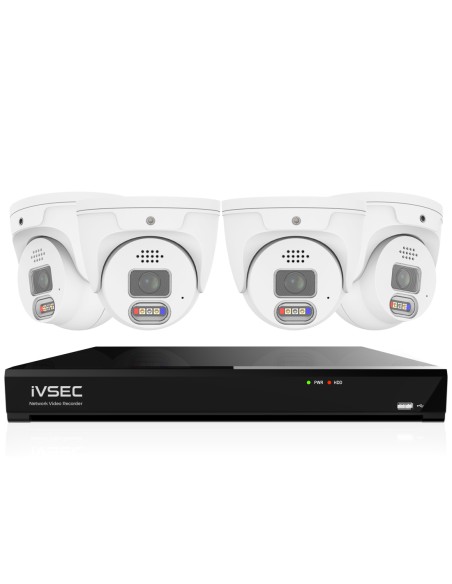
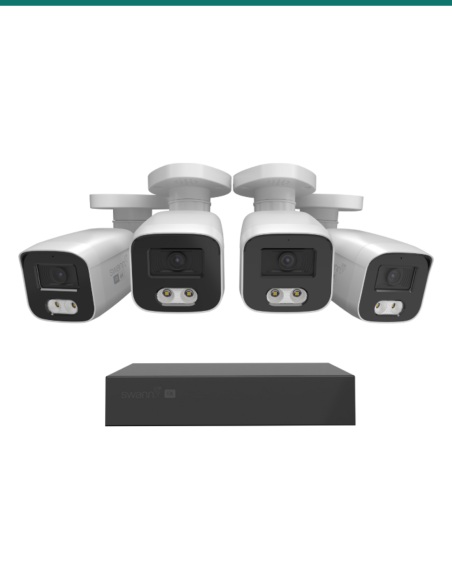
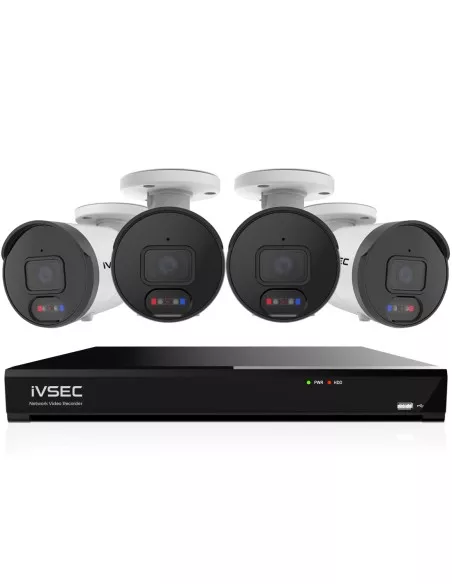
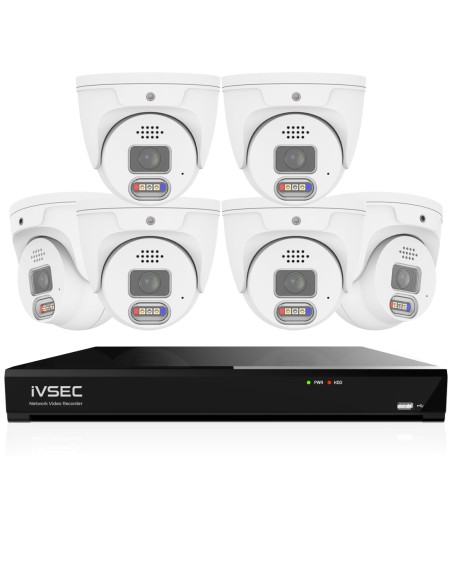
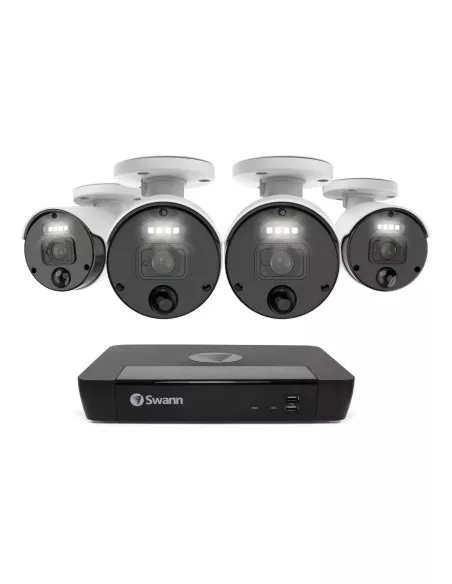
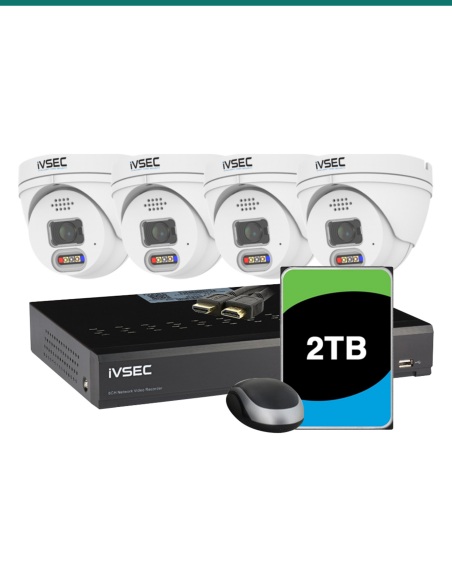
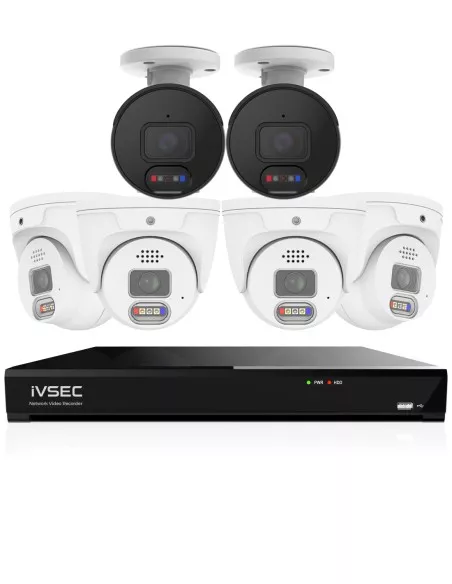
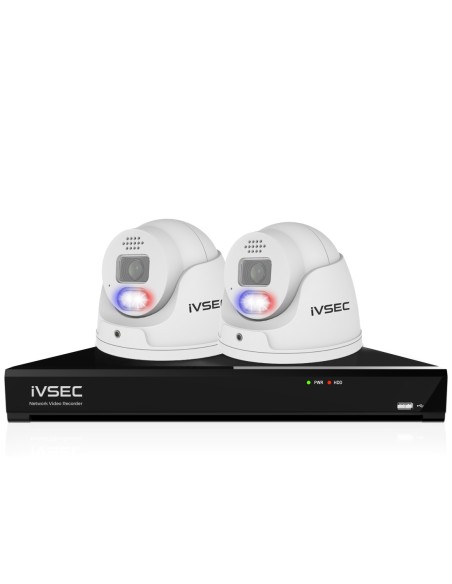
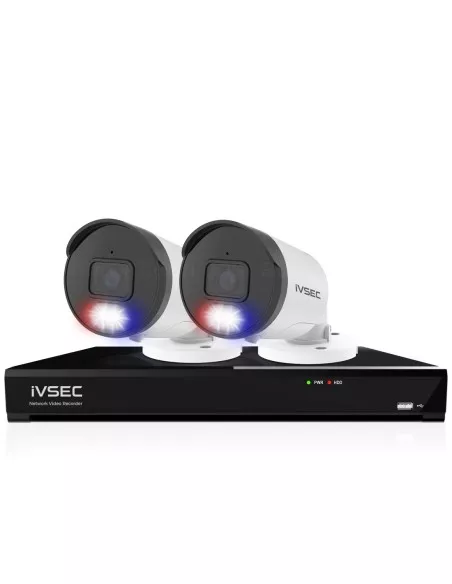
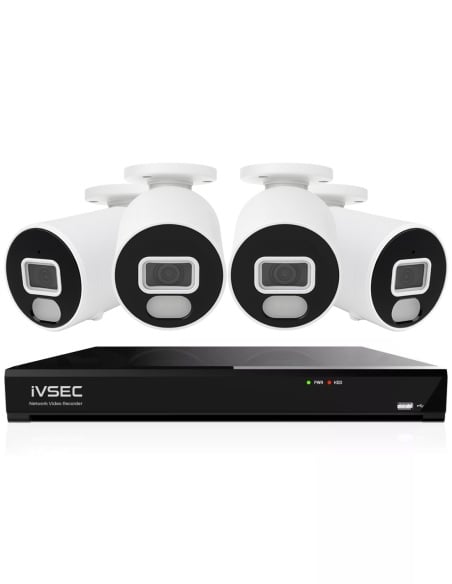
For reliable long-term performance, we recommend wired PoE CCTV systems designed for continuous recording and stable operation. The kits below are complete wired PoE systems — NVR, surveillance-grade hard drive, cameras and the switching required to run them — chosen for residential and commercial use across Australia.
Entry-level wired PoE CCTV kits — complete 4 to 8 camera bundles with an NVR from $800 to $1,500 retail, designed for continuous recording on Australian homes and small offices. Live pricing and stock.
A number of recurring assumptions lead buyers to choose wireless in situations where a wired PoE system would have been the better fit. Knowing them in advance makes the decision far easier.
Assuming Wi-Fi is always stable. A home or business Wi-Fi network that seems reliable for browsing and video streaming can still drop frames, reboot and re-authenticate in ways that affect continuous camera recording. Human use tolerates those interruptions; an evidence system does not.
Ignoring interference. Neighbouring networks, microwaves, bluetooth devices, metal roof sheeting and thick brick walls all attenuate Wi-Fi signal. The problem rarely shows up during a short test and often appears weeks later as intermittent camera dropouts.
Relying on battery-powered cameras. Battery cameras are convenient at install, but they are not suited to continuous recording. They trigger on motion, miss events during the post-trigger timeout, and require regular charging that is easy to forget until footage is needed.
Expecting business-level performance from a consumer kit. Wireless cameras designed for a front-door single-point deployment cannot cover a shop, office or warehouse the same way a wired PoE system can. Trying to make a residential wireless kit carry the workload of a commercial site leads to missed coverage and frustrated operators — compare recommended specifications in our small business CCTV guide and warehouse CCTV guide.
Frequently Asked Questions
Are wireless CCTV cameras reliable?
Wireless CCTV cameras can be acceptable for light, low-stakes monitoring such as a single entry point at an apartment or a short-term rental. For continuous recording and long-term security they are less reliable than wired PoE cameras because they depend on Wi-Fi signal strength, router uptime, and in many cases a rechargeable battery. Signal interference, dropped frames and missed events are more common than most product marketing suggests.
Which is more reliable, wired or wireless CCTV?
Wired CCTV systems are significantly more reliable than wireless CCTV systems. Each wired camera has its own dedicated Cat5e or Cat6 cable carrying both power and video back to the NVR, so there is no Wi-Fi contention, no battery dependence and no vendor cloud service between the camera and the recording. In long-term operation, wired PoE systems experience measurably fewer dropouts, missed events and device failures, which is why they are the default architecture in Australian commercial CCTV installations.
Why do professionals prefer wired CCTV?
Wired PoE systems deliver a predictable, dedicated connection between each camera and the NVR, with power and video travelling on a single Cat6 cable. That means no Wi-Fi contention, no battery management, and no reliance on cloud services. The result is continuous recording, higher sustained video quality and a significantly lower failure rate over multi-year operation, which is why wired PoE remains the default architecture in Australian commercial and long-term residential projects.
Do professional installers recommend wired or wireless CCTV cameras?
Most professional CCTV installers in Australia recommend wired PoE cameras as the default, and reserve wireless cameras for specific constraints such as apartments, rentals and heritage buildings. The reason is operational: wired systems have a lower failure rate, support true continuous recording without a cloud subscription, and retain their reliability over multi-year operation. On any project where cabling is physically possible, a wired PoE system is almost always the recommended specification.
Do wireless cameras lose connection?
Yes — wireless cameras can lose connection when Wi-Fi signal is weak, when the router reboots or is replaced, when firmware updates roll out, or when nearby devices create 2.4 or 5 GHz interference. Even well-placed wireless cameras typically experience short dropouts during congested periods, and each dropout is a gap in footage. A wired PoE camera on a dedicated cable does not experience those gaps because it is not sharing a contested radio channel.
What happens to wireless CCTV footage if the Wi-Fi drops out?
If the Wi-Fi network drops, most wireless CCTV cameras stop recording to the NVR or cloud until the connection is restored, creating a gap in footage. Some models buffer a short amount of video to local storage inside the camera — typically a few seconds to a few minutes — but that buffer is commonly overrun during longer outages such as a router reboot, firmware update or extended internet outage. A wired PoE system is unaffected by Wi-Fi status, because each camera has its own cable back to the NVR and does not use Wi-Fi for recording at all.
Is PoE better than wireless CCTV?
For reliability, video consistency and long-term cost of ownership, PoE is the stronger choice for most Australian homes and businesses. A single Cat6 cable delivers both power and data, the NVR stores footage locally, and there are no subscription fees or cloud dependencies. Wireless systems still have a role in specific situations such as apartments and rentals, but where cabling is possible, wired PoE is consistently the better long-term investment.
Does a wired CCTV system have better video quality than wireless?
Wired CCTV systems consistently deliver higher sustained video quality than wireless CCTV systems. A wired PoE camera transmits its full stream over a dedicated cable, so it can run at its native resolution — commonly 4 MP or 8 MP/4K — at a steady frame rate around the clock. Wireless cameras often reduce bitrate and resolution dynamically to cope with Wi-Fi congestion, which is why recorded wireless footage can look acceptable live but degrade during playback of the exact moments that matter most.
Are battery-powered security cameras reliable for 24/7 recording?
Battery-powered security cameras are not designed for true 24/7 continuous recording. To preserve battery life they rely on motion triggers, which means any event that starts before the trigger, occurs during the post-trigger timeout, or happens while the battery is flat is simply not recorded. For reliable round-the-clock coverage, a wired PoE camera on a dedicated cable and a local NVR is the appropriate architecture.
Do wired CCTV systems need internet to record?
No. A wired PoE CCTV system records continuously to a local NVR on a closed wired network, regardless of internet status. Internet is only required for remote viewing from a phone, push notifications, or optional cloud backup. Many Australian businesses deliberately keep the CCTV network completely isolated from the internet, which means the system keeps recording the day the NBN fails, the router is updated or the office internet is offline.
Do wireless CCTV cameras have monthly subscription fees?
Many wireless CCTV cameras require a monthly subscription to unlock core features such as extended cloud storage, motion event history, smart detection and multi-camera viewing. Without the subscription, retention is typically capped to a short rolling window — often 24 hours — and older footage is deleted automatically. A wired PoE system with a local NVR records to its own surveillance-grade hard drive with no ongoing fees, and retention is limited only by the size of the drive.
Can wireless CCTV cameras be hacked or jammed?
Wireless CCTV cameras are more exposed to both radio-level interference and credential-based attacks than wired PoE cameras. Inexpensive Wi-Fi jammers can disrupt the 2.4 GHz band and force cameras offline, and cameras tied to a vendor cloud account can be targeted through stolen or reused passwords. A wired PoE system on an isolated network is not exposed to either attack vector, because it does not transmit over radio and does not require a cloud account to record locally to the NVR.
Do wireless CCTV cameras work in bad weather?
Wireless CCTV cameras can experience reduced performance in heavy rain, storms and temperature extremes. Rain and dense cloud cover can attenuate Wi-Fi signal even over short distances, and cold weather materially shortens the life of the batteries used in wire-free cameras. Wired PoE cameras specified to IP66 or IP67 are physically sealed against weather and are unaffected by the atmospheric conditions that can degrade a wireless link.
When should I use wireless cameras?
Wireless cameras are most appropriate in situations where cabling is not practical: apartments without cable paths to a central NVR, short-term rentals, heritage buildings with restricted drilling, and temporary or event-based setups. They are also a reasonable choice when only one or two cameras are needed and the site already has strong Wi-Fi coverage. Beyond those exception cases, a wired PoE system is the more dependable long-term solution.