
Where Should CCTV Cameras Be Placed in Schools and Childcare?
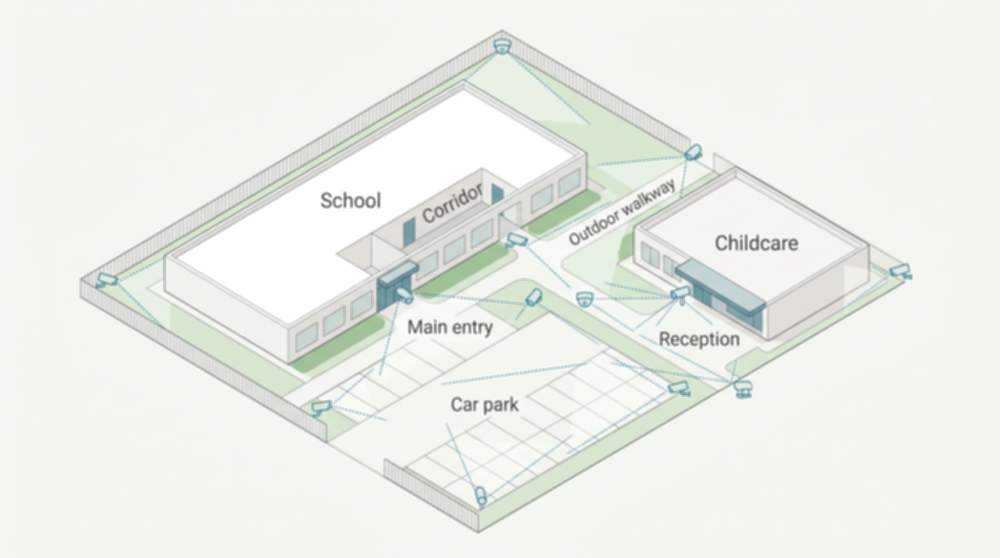
This guide is a general, non-advisory overview of where CCTV cameras are commonly placed across Australian schools and childcare centres. The goal is buyer-side planning guidance — how camera count, coverage areas and NVR sizing fit together — rather than premises-specific security consulting. Common placements include main entries and reception, shared corridors, car parks, outdoor pathways and outdoor common areas. Sensitive spaces such as bathrooms and change rooms are excluded. Coverage decisions vary by site and should always reflect your operator policy, local privacy settings and any applicable state surveillance considerations. For full site-level planning, see our childcare centres guide and school CCTV systems guide.
At a glance
Starting point: Entries, exits and reception
Indoor common areas: Corridors and shared spaces that are already open and visible
Outdoor: Gates, walkways, pickup / dropoff, car parks
Excluded: Bathrooms, change rooms, counselling rooms, staff rest areas
Start With Entrances, Exits and Reception Areas
Entries and exits are the single most common coverage targets on both school and childcare sites. That is not a recommendation as much as an observation: the entry is the pinch point where everyone on the site arrives and leaves, and it is the spot where general movement, identification-quality imagery and situational context all converge on a single camera position. A well-framed entry camera typically captures the general approach, the doorway itself and an overview of the adjacent footpath or gate.
Reception tends to sit alongside the entry in most layouts. A camera framed from the back wall toward the sign-in counter captures general movement through the space without needing a second camera trained directly on the desk. Schools commonly add a second camera in reception framed the opposite way, so there is coverage of both the outer door and the internal corridor from the admin block.
The principle here is simple: the entry is the first place cameras go, and it is usually the single most useful camera position on the whole site. Placement at the entry should respect the site's privacy approach — the goal is overview of the space, not constant close monitoring of individuals. Mounting under a canopy or just inside the doorway at around 3 metres is common, with an angle that frames the walking path rather than the faces of anyone standing still at the counter.
Common Indoor Areas That Are Often Covered
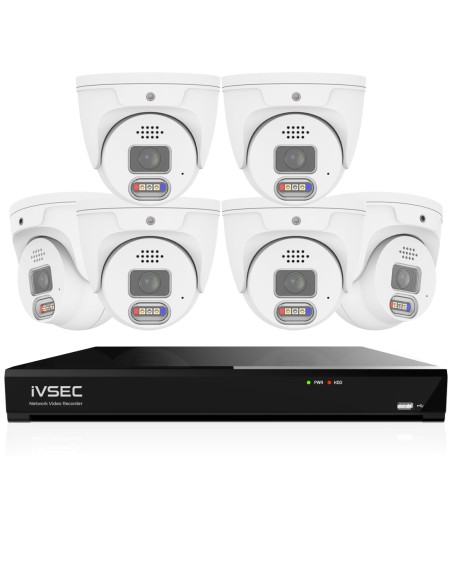
After entries and reception, the next common coverage areas are shared corridors and indoor common areas that are already open and visible. The typical goal is general situational awareness across routes adults and children move through during the day, not close monitoring of individuals in a specific room. Wide-lens domes or turrets mounted flush to the ceiling are the usual choice for these positions because they capture most of a corridor from a single camera.
Common indoor positions include the junction between the main corridor and any secondary corridor, admin-side foyers that connect reception to the teaching or care areas, and large shared indoor spaces such as assembly areas or common play rooms. Coverage is generally overview framing — the whole room rather than one corner — because that matches the typical purpose of retrieving footage during incident review or general site monitoring.
Coverage decisions always need to take privacy considerations into account. Bathrooms, change rooms, counselling rooms, staff rest areas and similar private spaces are excluded from camera placement. Where a common area is partially open to both a general movement path and a private space, the usual approach is to frame the camera so only the general movement path is in view.
Outdoor Areas Commonly Considered for Coverage
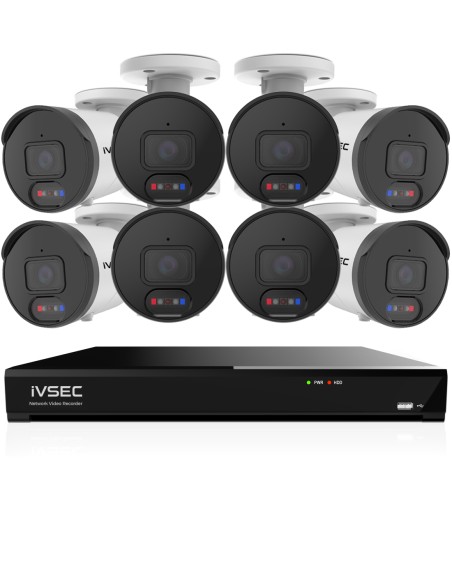
Outdoor coverage commonly extends to the main gate, outdoor walkways between buildings, the front-of-school pickup and dropoff zone, and the car park. At larger sites, these are usually covered by a mix of bullet cameras on dedicated poles and turret cameras under the eaves of adjacent buildings. Bullet cameras tend to handle the longer external distances better because the larger housing typically carries a longer IR range.
The outdoor common play area is frequently covered at childcare centres and primary schools, usually by one or two cameras framed across general movement zones rather than directly at seating or equipment. At schools, general outdoor recreation areas are sometimes covered where the layout allows unobtrusive camera placement — the usual aim is overview and incident-review coverage, not continuous monitoring of named individuals.
Outdoor cameras are typically specified IP66 or IP67 rated. Mounting height is commonly 3 to 4 metres, which keeps the housing out of easy reach while still framing people at a usable angle. Angle selection matters more than megapixel count: a 4 MP camera pointed well will outperform an 8 MP camera pointed into direct sun every time.
Why Coverage Planning Matters More Than Just Camera Count
Camera count is the easiest number to fixate on, and it is not the one that matters most. A well-planned 12 camera deployment will almost always outperform a poorly-planned 20 camera deployment. The reason is framing: a camera pointed at a blank wall, blocked by a tree, aimed into afternoon glare or mounted too high to identify anyone is an expensive decoration. A well-framed camera with clear sightlines and sensible mounting does exactly what the system is there to do.
The usual planning sequence is straightforward. Start with entries and reception. Add the key indoor common areas and shared corridors. Add outdoor walkways, gates, car parks and pickup zones. Then check whether the layout has any remaining blind spots — a corner that neither the indoor nor outdoor cameras see, a back stairwell that both miss, a side gate that is not in frame. Each blind spot is either accepted (usually because it is a private space that should not be covered) or added to the camera list.
NVR channel planning is part of the same decision. An 8 channel NVR is full at 8 cameras; a 16 channel NVR on an 8 or 12 camera deployment leaves real headroom for expansion. Most sites grow their camera count over time, and spare PoE ports are what keep that growth cheap. For system-level planning, see the childcare centres guide or the school CCTV systems guide.
Wired PoE Systems Make Larger Layouts Easier to Manage
Larger layouts benefit from wired PoE for the same reason as larger commercial sites: each camera has a dedicated Cat6 cable running back to a central NVR, and that cable carries both power and video. There is no dependence on Wi-Fi coverage across the site, no battery cycle to manage and no vendor cloud service sitting between the camera and the recording. The NVR writes continuously to surveillance-grade drives on a local network, which keeps the system running the day the internet drops.
For any layout that spans multiple rooms, multiple buildings or a larger outdoor footprint, wired PoE is the architecture that scales cleanly. It is also the architecture that is easiest to maintain over years of operation — one recorder, one firmware path and one place to pull footage from. For the full comparison, see the wired vs wireless CCTV guide.
Recommended CCTV Systems
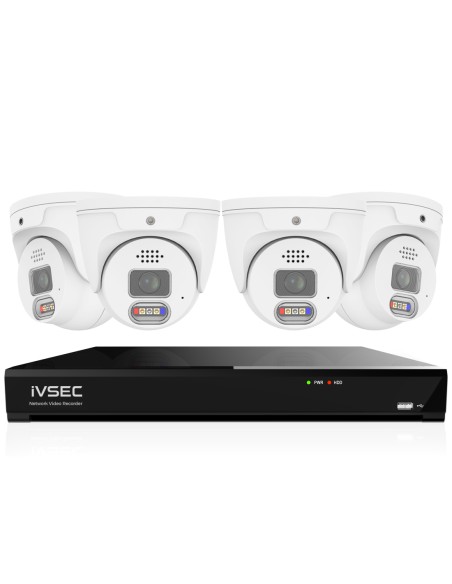
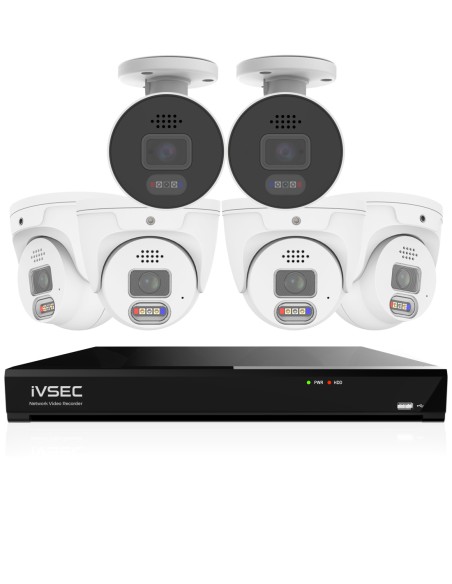
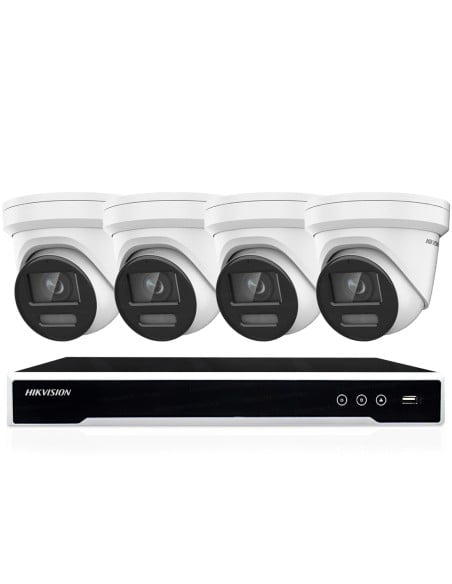
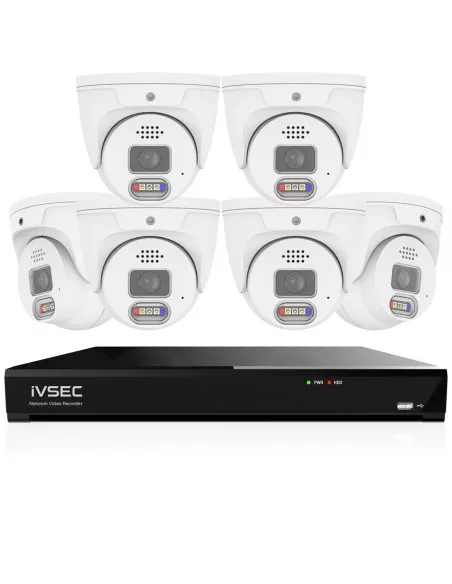
Mid-range wired PoE CCTV kits from $1,500 to $5,000 retail — the 8 to 12 camera, 16 channel NVR configuration most commonly specified across Australian childcare centres and school blocks. Live pricing and stock.
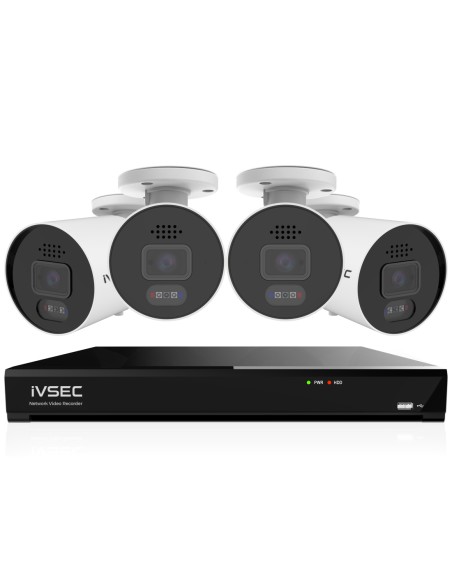
Complete wired PoE kits from 4 to 16 cameras, biased toward the 8 and 16 channel configurations most common across education sites.

Browse CCTV System Options
Select a system based on your required number of channels and cameras:
- 8 Channel 4 Camera Systems
- 8 Channel 6 Camera Systems
- 8 Channel 8 Camera Systems
- 16 Channel 8 Camera Systems
- 16 Channel 10 Camera Systems
General information only. This page summarises common CCTV camera placements on Australian school and childcare sites. It is not a formal security-consulting document and is not a site-specific design. Infront Technologies supplies CCTV hardware and complete kits; we do not provide licensed security consulting or premises-specific system design under a security licence. Requirements may vary by state and by site, and camera placement, retention and access decisions should always be made in accordance with your operator policy, the Privacy Act 1988 and applicable workplace-surveillance laws. For site-specific installation and compliance advice, consult a suitably qualified installer or adviser where required.
Frequently Asked Questions
Where are CCTV cameras commonly placed in childcare centres?
Common placements include the main entry and sign-in area, reception, shared corridors, indoor common play areas that are already open and visible, and outdoor common play areas. Coverage decisions vary by site. This is general information only; site-specific placement should consider your operator policy, local privacy settings and any state workplace-surveillance considerations. See our childcare centres CCTV guide for full system-level planning.
Where are CCTV cameras commonly placed in schools?
Common placements include main entries and gates, admin and reception, shared corridors, car parks, outdoor walkways, pickup and dropoff zones, and common areas. The goal is usually site-wide situational awareness across shared spaces. Camera counts and placements vary based on site size, layout and risk profile. See our school CCTV systems guide for full system-level planning.
Should cameras cover entrances and exits?
Entrances and exits are among the most common coverage targets on school and childcare sites. They are the pinch points for everyone moving on or off the site, which is why so many layouts start there. A camera framed on an entry typically captures general approach, identification-quality imagery at the door or gate, and a secondary overview of the immediate area.
Are outdoor play areas usually monitored?
Outdoor common play and recreation areas are often covered by one or more external cameras framed across general movement zones. Coverage decisions vary by site and should be made with the site's privacy approach in mind. The intent is typically overview and incident review rather than constant individual monitoring.
Are there areas cameras should avoid?
Bathrooms, change rooms, nappy-change areas, counselling rooms and staff rest areas are not monitored. Placement in those spaces is not appropriate and is not consistent with standard privacy expectations on an education or childcare site.
Are wired CCTV systems better for larger sites?
Yes, generally. Wired PoE on an NVR scales more predictably across a larger footprint because each camera has its own dedicated cable and the recording happens locally. Wireless systems struggle at that scale due to signal contention, distance and the number of cameras involved.
How many cameras are typically needed?
Childcare centres commonly run 4 to 12 cameras. Schools typically run 12 to 40 depending on site size. The important number is not the headline camera count but whether entries, shared spaces and key outdoor zones are covered with appropriate framing.
Can a system be expanded over time?
Yes, up to the channel capacity of the NVR. Adding a camera on a PoE system with spare ports is usually plug-and-play. Beyond the NVR's limit, most sites add a second NVR rather than replacing the first.
Is wireless suitable for school or childcare layouts?
Wireless is rarely the right fit for a whole-of-site deployment. Sites at this scale favour wired PoE because the reliability and continuous-recording characteristics match the site's operational needs. Wireless may still be reasonable for a small supplementary role where cabling is impractical. See our wired vs wireless CCTV guide for more.
What type of camera works best indoors?
Domes and turrets are the common choice indoors for their tidy form factor and wide viewing angle on shared corridors and open rooms. Bullets are more often used outdoors. Camera choice also depends on mounting surface, lighting conditions and the framing required for the specific space.
For the full system-level guide, pick the one that matches your site: childcare centres, schools, home or small business. Browse the full CCTV systems, NVR recorders and IP cameras ranges.
Ready to size up a system?
Once the coverage plan is in place, pick a complete wired PoE kit sized for the layout — all kits ship Australia-wide with local warranty and support.