Your cart
There are no more items in your cart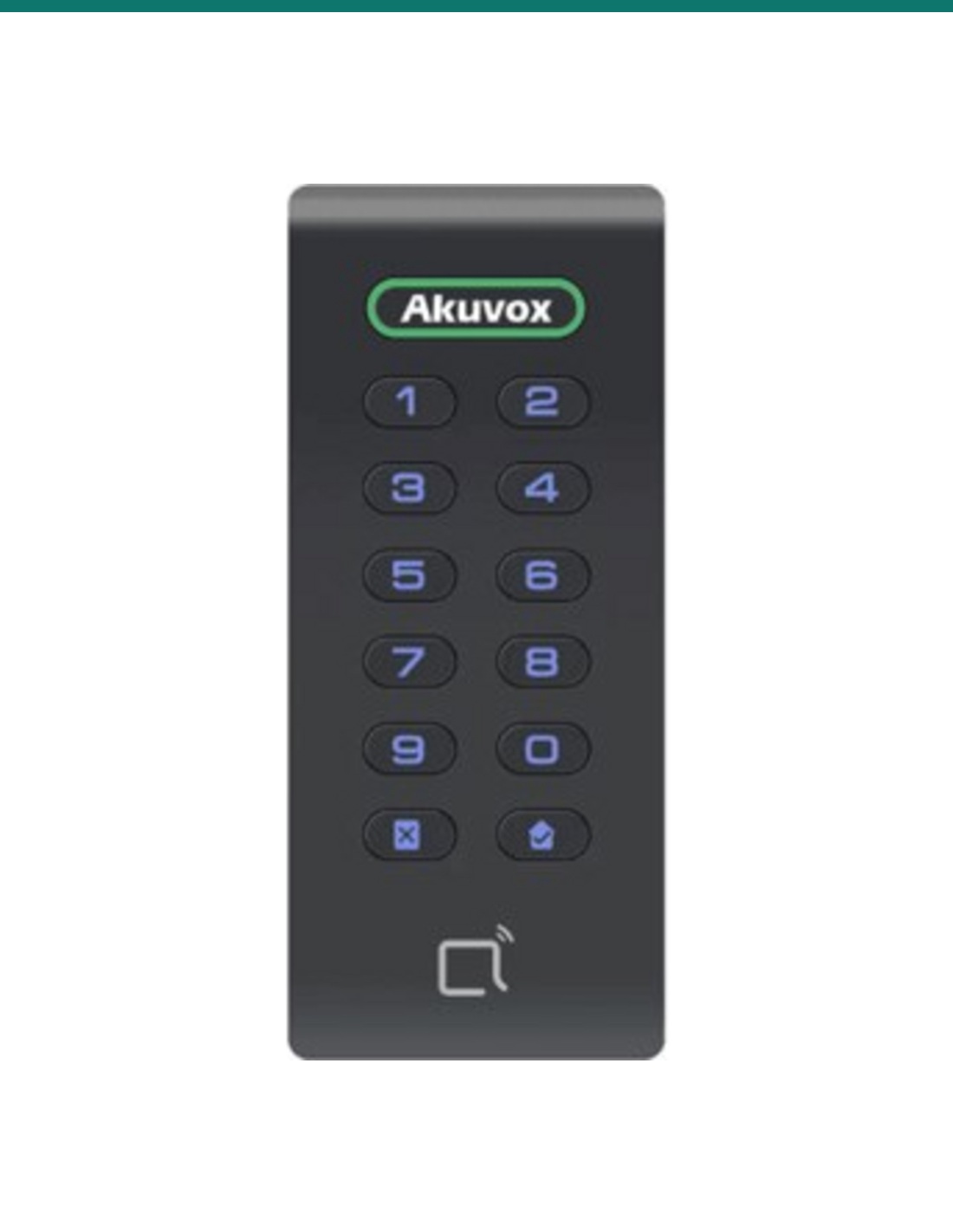


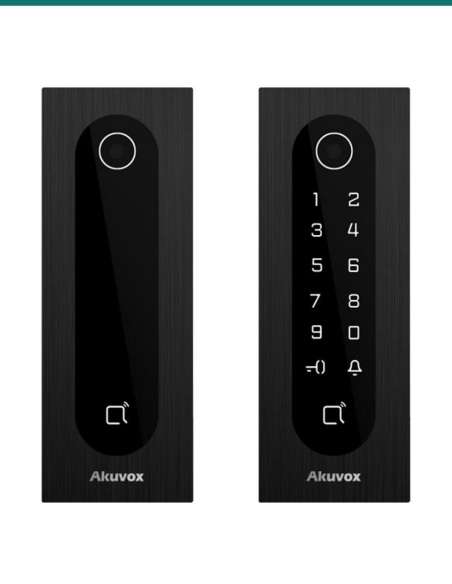


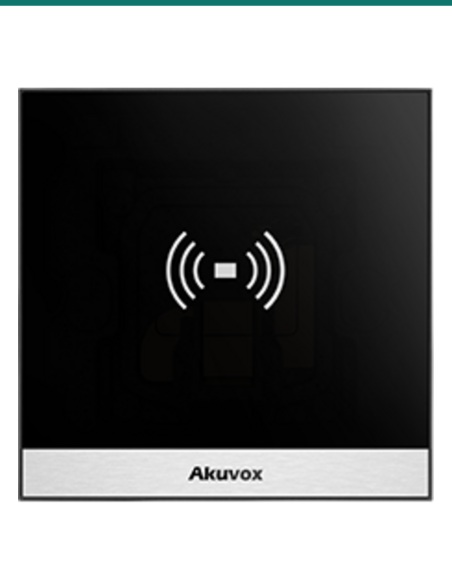
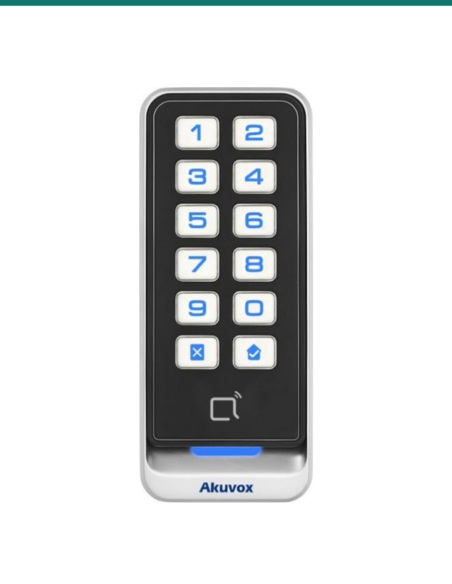
AKUVOX PLASTIC WIEGAND RFID CARD READER 13.56MHz & 125k IP65
Akuvox ACR-CRP11 — SIP video intercom / access hardware.
The Akuvox AK-ACR-CRP11 is a dual-frequency RFID card reader built for door entry and access control installations that require straightforward Wiegand integration, indoor or outdoor mounting, and support for both 13.56MHz and 125kHz credentials. Its IP65-rated plastic housing makes it suitable for perimeter doors, gates, tenancy entries, plant rooms and retrofit projects where a compact external reader is needed.
Product shot may differ from supplied revision or region-specific packaging.
For installers working with Akuvox door entry systems or other compatible access platforms, the AK-ACR-CRP11 fills a practical role: present-card-to-open authentication using standard Wiegand signalling, without adding unnecessary complexity at the edge. Dual-frequency reading lets sites continue using common 125kHz credentials while also supporting 13.56MHz cards in mixed or staged-upgrade environments.
Infront Technologies Australia can assist with reader selection, system matching and deployment planning for apartment, commercial and light industrial access control projects, helping ensure credential technology, controller compatibility and field mounting conditions are aligned before hardware goes on the wall.
The key specification on the AK-ACR-CRP11 is its support for both 13.56MHz and 125kHz RFID credentials. In practice, that gives installers flexibility when dealing with existing tenant cards, older staff fobs, or staged upgrades where the controller and credentials are not being replaced at the same time. Rather than forcing an immediate cutover, the reader can sit comfortably in systems where both frequency types are still present on site.
This is especially useful at apartment entries, side doors, service access points and internal secure zones, where card technology often varies across installation history. A dual-frequency edge reader reduces truck rolls, simplifies stockholding and helps maintain credential continuity while broader access infrastructure is modernised.
The AK-ACR-CRP11 uses a Wiegand interface, keeping it squarely in the mainstream of access control integration. For door stations, standalone controllers, distributed I/O or central access panels that already accept Wiegand reader inputs, this makes deployment familiar and low-friction. Installers can cable the reader back to the controlling hardware and let the controller manage user permissions, event handling and lock logic.
That division of responsibility matters in multi-door systems: the reader focuses on credential capture at the edge, while the controller handles decision-making centrally. It is a practical architecture for reliable entry points because the reader remains compact and purpose-built, while the wider system retains flexibility for enrolment, schedules, intercom workflows and future expansion.
With an IP65 rating and plastic housing, the AK-ACR-CRP11 is aimed at real installation environments rather than sheltered lab conditions. It is suitable for indoor and outdoor mounting where a credential reader may be exposed to dust, light rain, washdown splash or regular touch traffic at the door frame, gate post or wall plate.
For Australian installers, that matters on external apartment doors, side access gates, office tenancies, delivery entries and common-area doors where reader reliability is expected year-round. The housing remains lightweight and easy to place, while the environmental rating supports use beyond purely indoor lobbies or protected corridors.
The reader captures a valid RFID credential, passes the ID data across Wiegand, and leaves access logic to the host controller or intercom platform.
User presents a 13.56MHz or 125kHz card or fob to the reader face.
Credential data is handed off to the connected access controller using the Wiegand interface.
The host system checks permissions, schedules or site-specific rules for the presented credential.
If authorised, the controller triggers the lock, relay or door station output assigned to that entry point.
Verified specifications drawn from the supplied product context.
Common access-control terms relevant to this reader and the systems it connects to.
Physical dimensions were not provided in the verified source context, so exact height, width and projection are not listed here. For flush planning, conduit positioning and compliance drawings, confirm final mechanical measurements from the current Akuvox installation documentation before cut-in or surface-mount preparation.
Typical companion hardware categories for a Wiegand RFID edge reader in an Akuvox-focused installation.
A compatible controller with Wiegand reader input is the primary pairing, as it performs credential validation and lock control.
Choose credential stock that matches the frequencies in use on site, especially where migration from low-frequency to higher-frequency cards is underway.
The reader itself does not decide access; authorised events from the controller typically release a strike, maglock or gate relay output.
Use appropriate low-voltage reader cabling, weather-suitable junction protection and secure mounting surfaces for reliable outdoor service.
It supports both 13.56MHz and 125kHz RFID frequencies, which is useful where a site runs mixed credentials or is transitioning from older cards to newer ones.
Yes. The unit is specified with an IP65 rating and is described for indoor and outdoor mounting, making it suitable for many exposed door-side positions.
No. Based on the verified information, it is a Wiegand RFID reader. It is intended to pass credential data to a compatible access controller or intercom/access platform.
The AK-ACR-CRP11 uses a plastic housing, which helps keep the unit lightweight and practical for common wall or frame mounting applications.
It uses Wiegand, a standard reader output format commonly used to connect door-side readers back to access control hardware.
Yes, it is well suited to Akuvox-focused access and intercom installations where a compact external RFID reader with Wiegand integration and outdoor-rated housing is required.
Low-voltage access control equipment should be installed, wired and commissioned by suitably qualified technicians in accordance with current Australian standards, site conditions and the host controller manufacturer's instructions.
20 related items