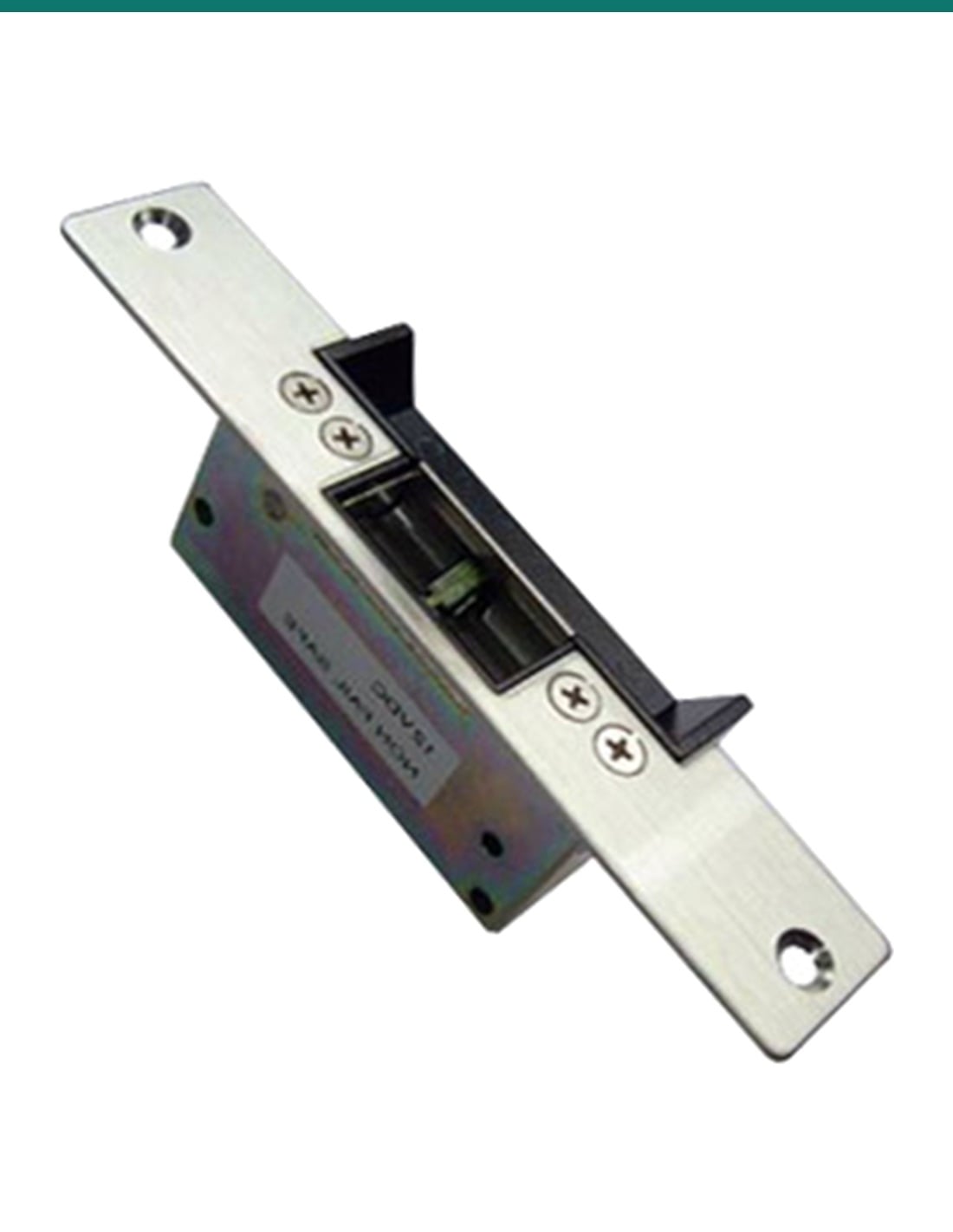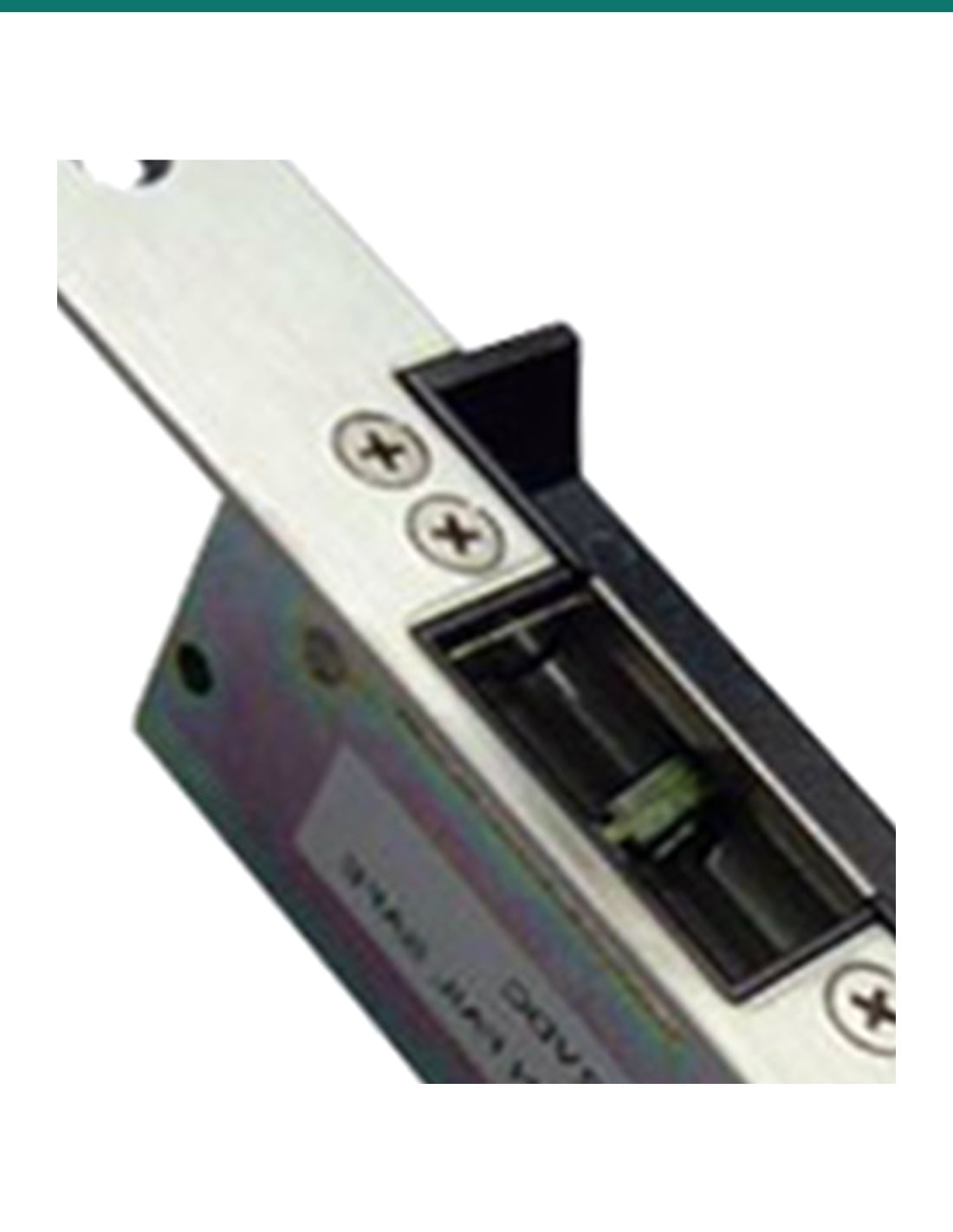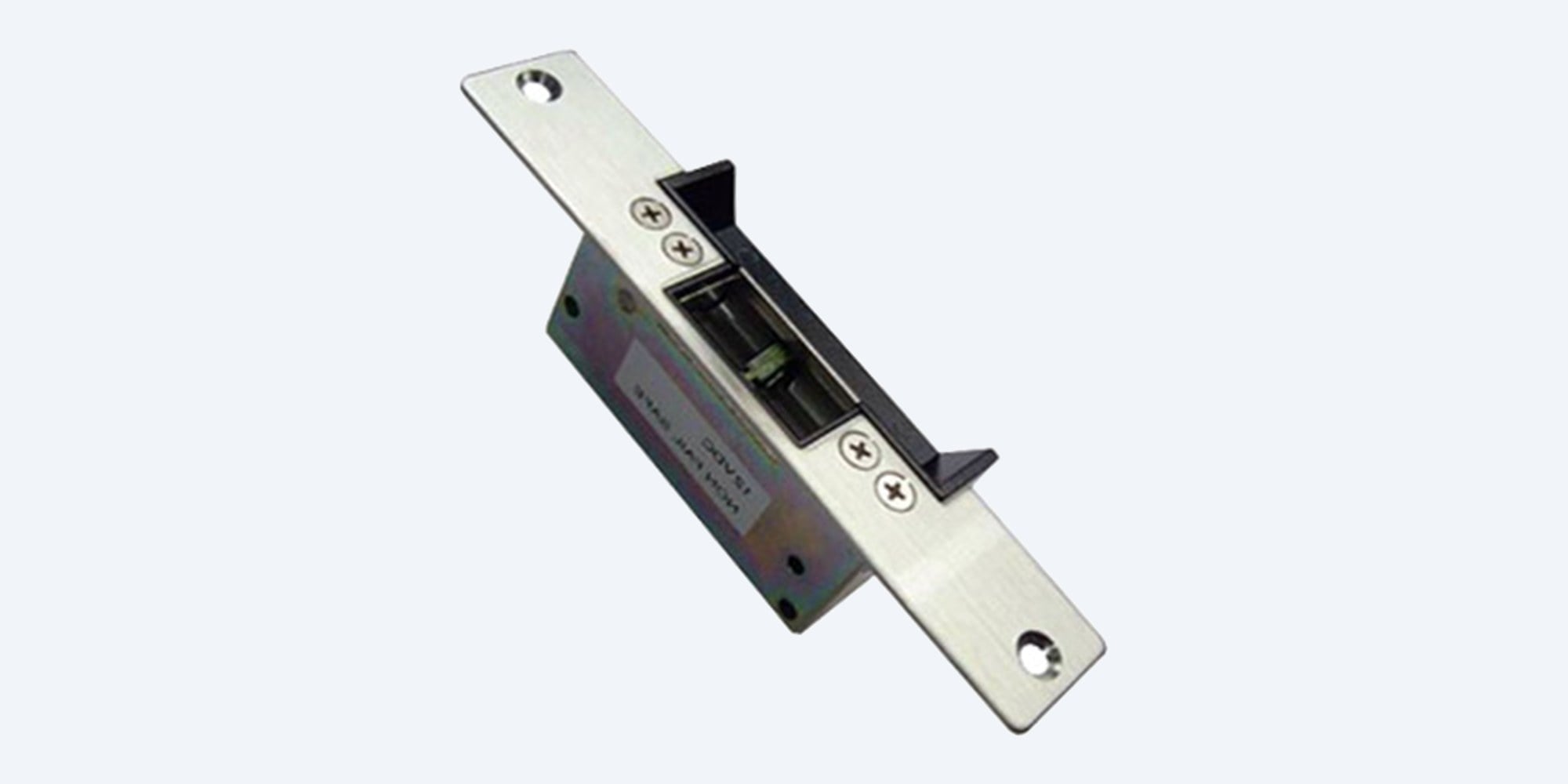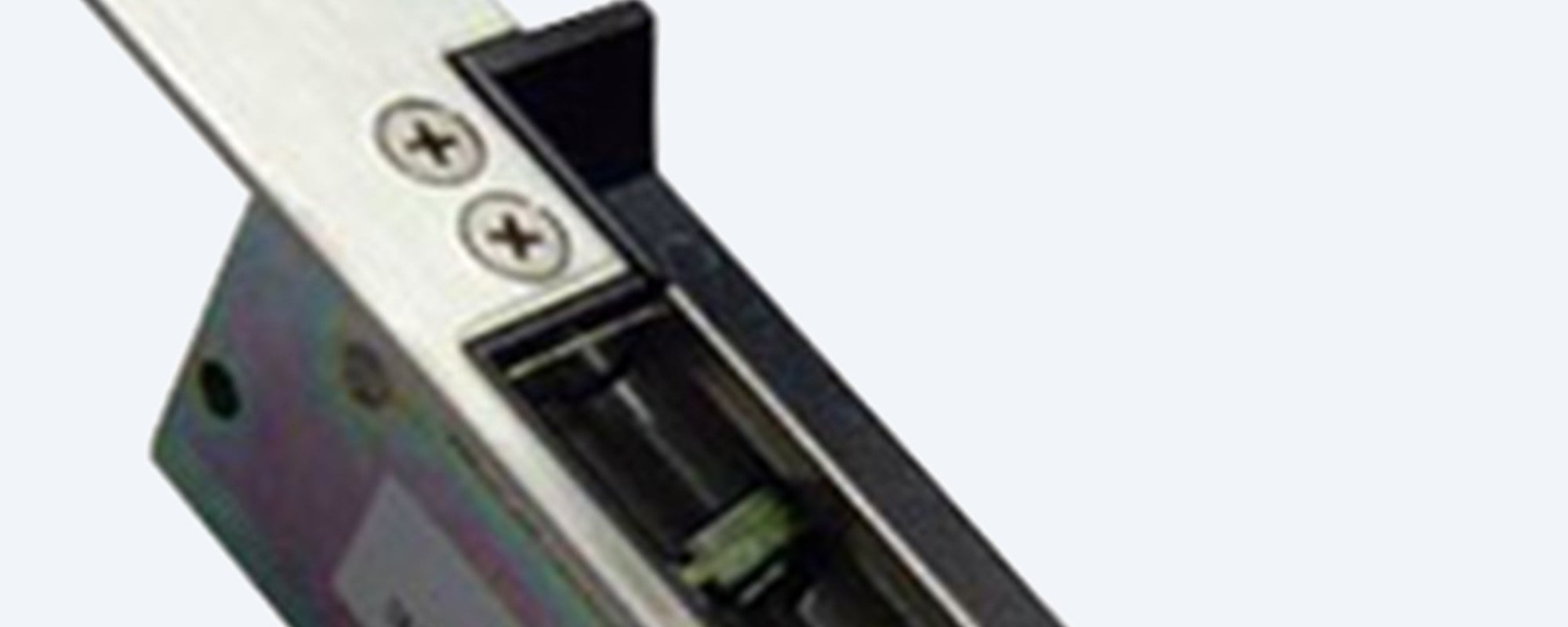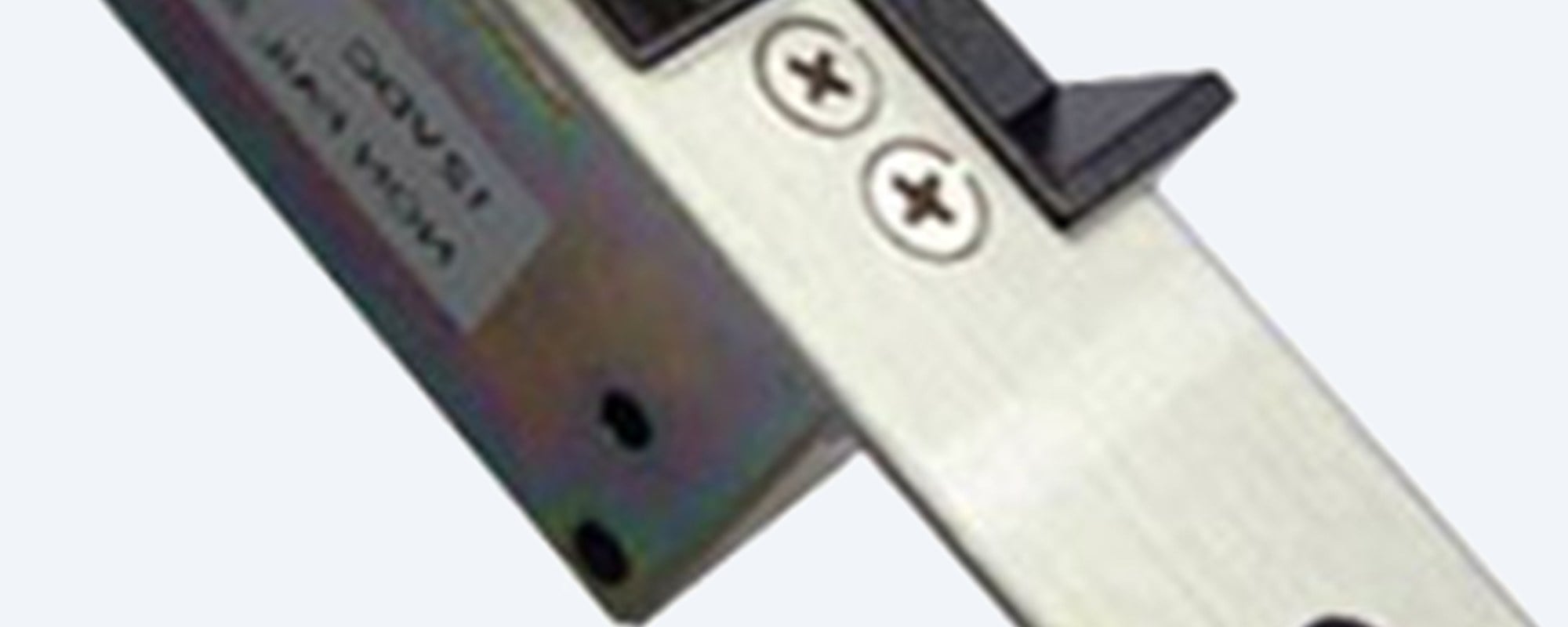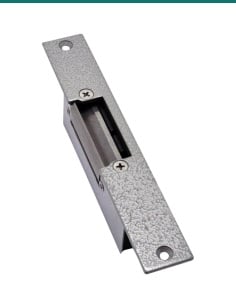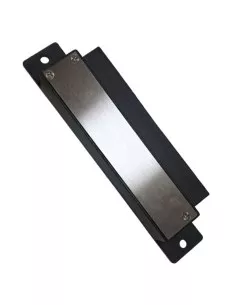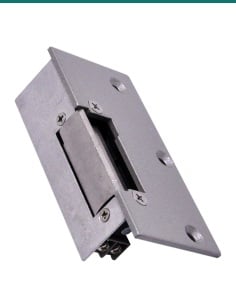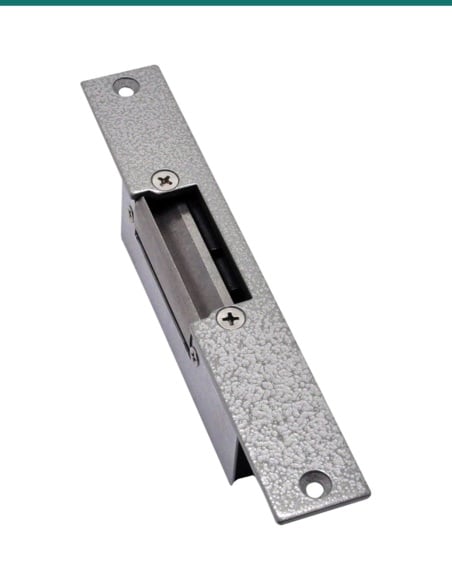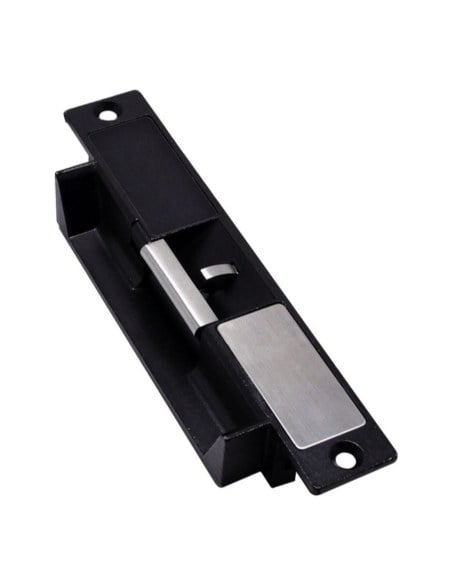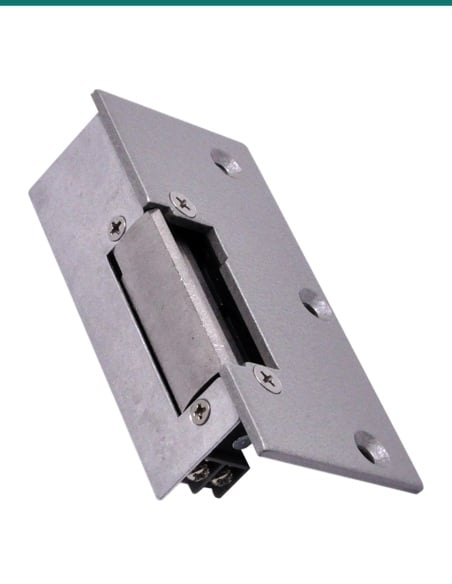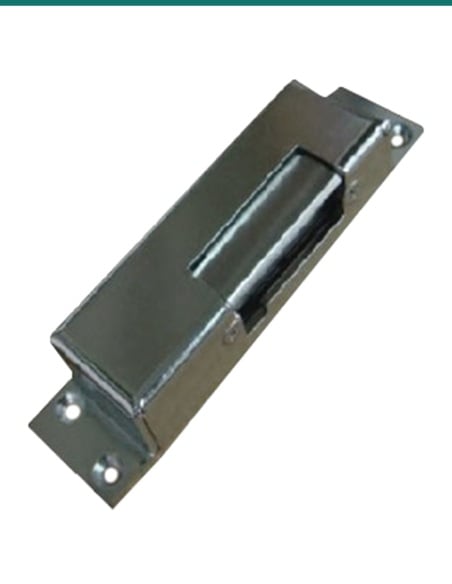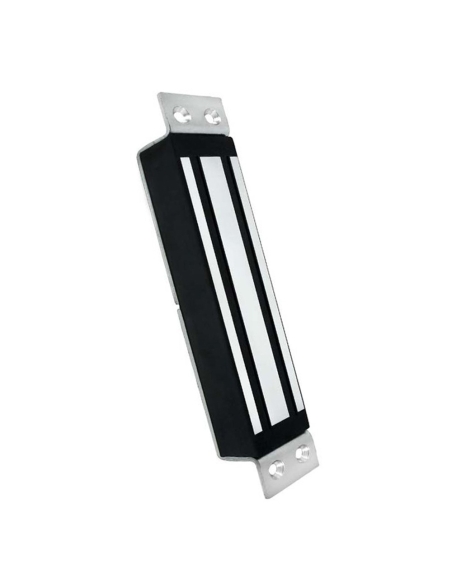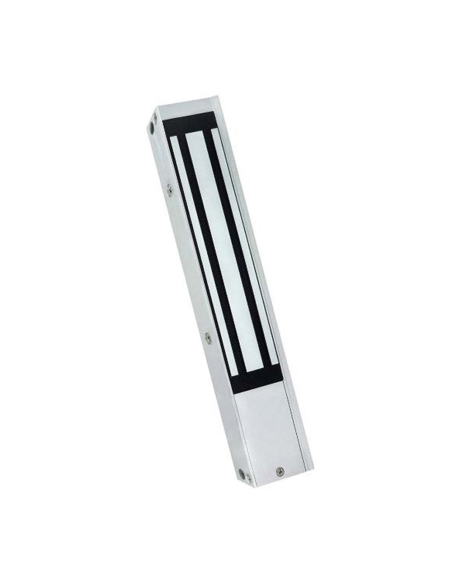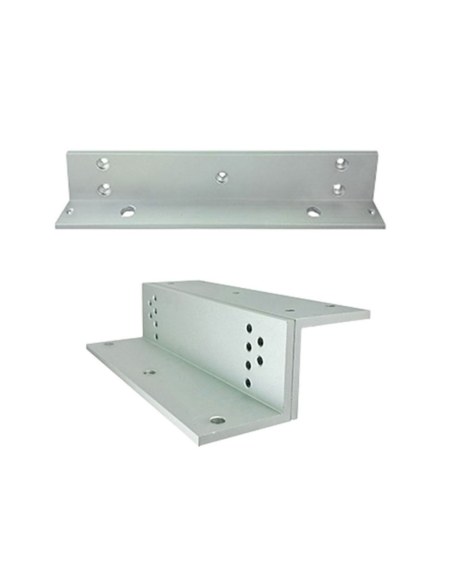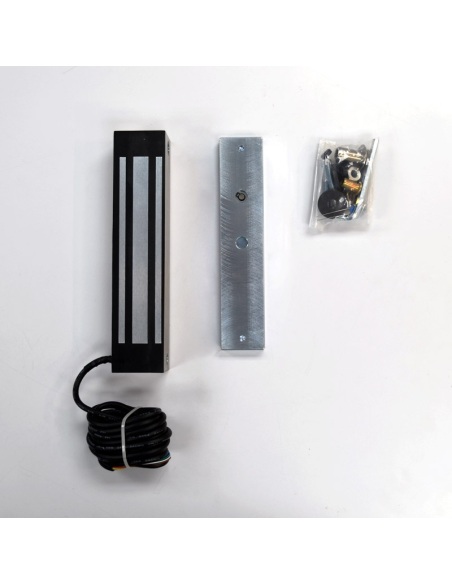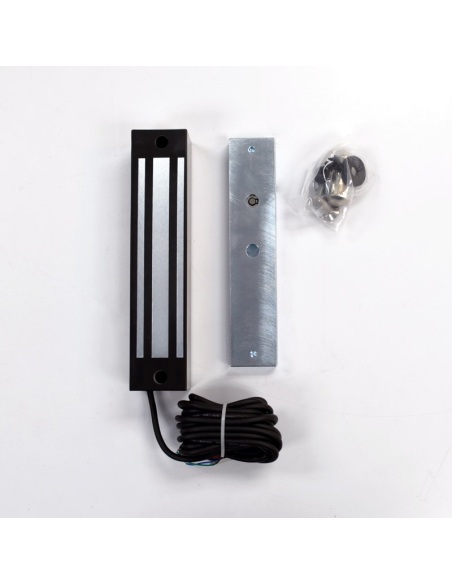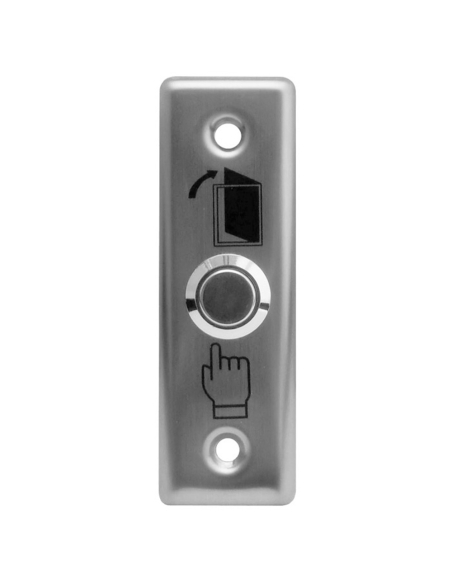
Watchguard ACLOC102: a monitored stainless steel mortise door strike, convertible between fail-secure and fail-safe, with lock and door status sensors.
- ✓12 VDC at 260 mA
- ✓Fail-secure by default, convertible to fail-safe
- ✓Lock and door status sensors (NO, NC, COM)
- ✓12.7 mm door latch, 12.7 mm keeper depth
- ✓Stainless faceplate 165 × 31 × 2 mm
- ✓Varistor and spacers included
Description

Fail-secure or fail-safe.
With lock and door sensors built in.
The Watchguard ACLOC102 is a stainless steel mortise electric door strike for access control. It converts between fail-secure and fail-safe and reports both the lock state and the door state to your controller.
In one sentence: the Watchguard ACLOC102 is a stainless steel mortise electric door strike drawing 260 mA at 12 VDC, convertible between fail-secure and fail-safe, with lock and door status sensor outputs and a 12.7 mm keeper depth.
Door strike only. The reader, power supply and cable are separate.
This listing is one ACLOC102 strike. It needs something to switch it (a reader, controller or intercom relay), a 12 VDC supply and cable to the door frame.
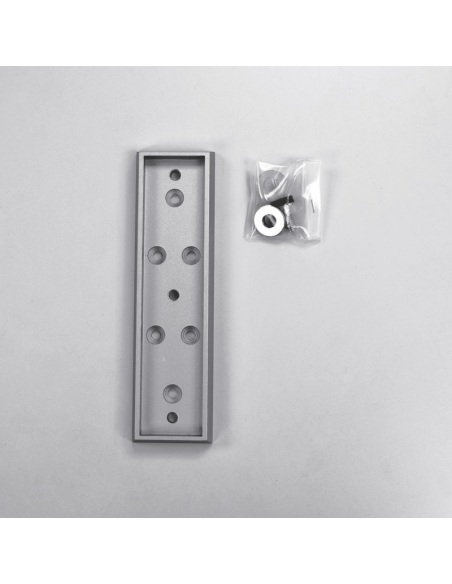
- ACLOC102 door strike
- Mounting screws
- Varistor for spike protection
- Spacers to set the faceplate flush
- An access control reader, controller or intercom with a lock relay
- A 12 VDC supply able to deliver 260 mA for the strike
- Multi-core cable from the controller to the frame, with spare cores for the sensors
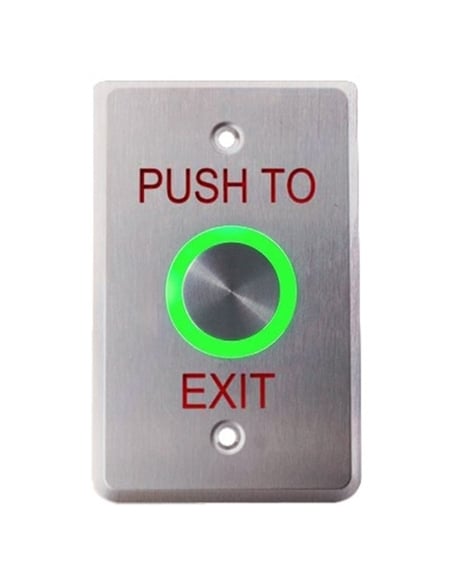
- An exit button if people leave through the door
See the lock and the door, not just the button press.
Two sensor outputs come out of the strike. The lock status sensor shows whether the strike is locked or released; the door status sensor shows whether the door is closed. Each has NO, NC and COM wires, so a controller or alarm panel can flag a door that is forced or left open.

Keeper
12.7 mm latch, 12.7 mm keeper depth.
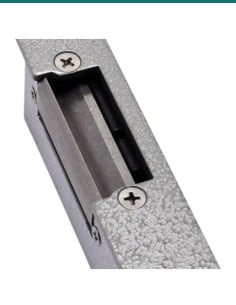
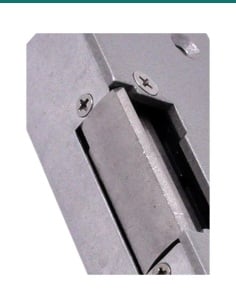
The keeper releases when the strike changes state, so the door's latch can pass. Watchguard rates it for a 12.7 mm door latch with a 12.7 mm keeper depth. It ships fail-secure; reverse the solenoid inside to make it fail-safe.

Body and faceplate
165 × 31 mm stainless faceplate.
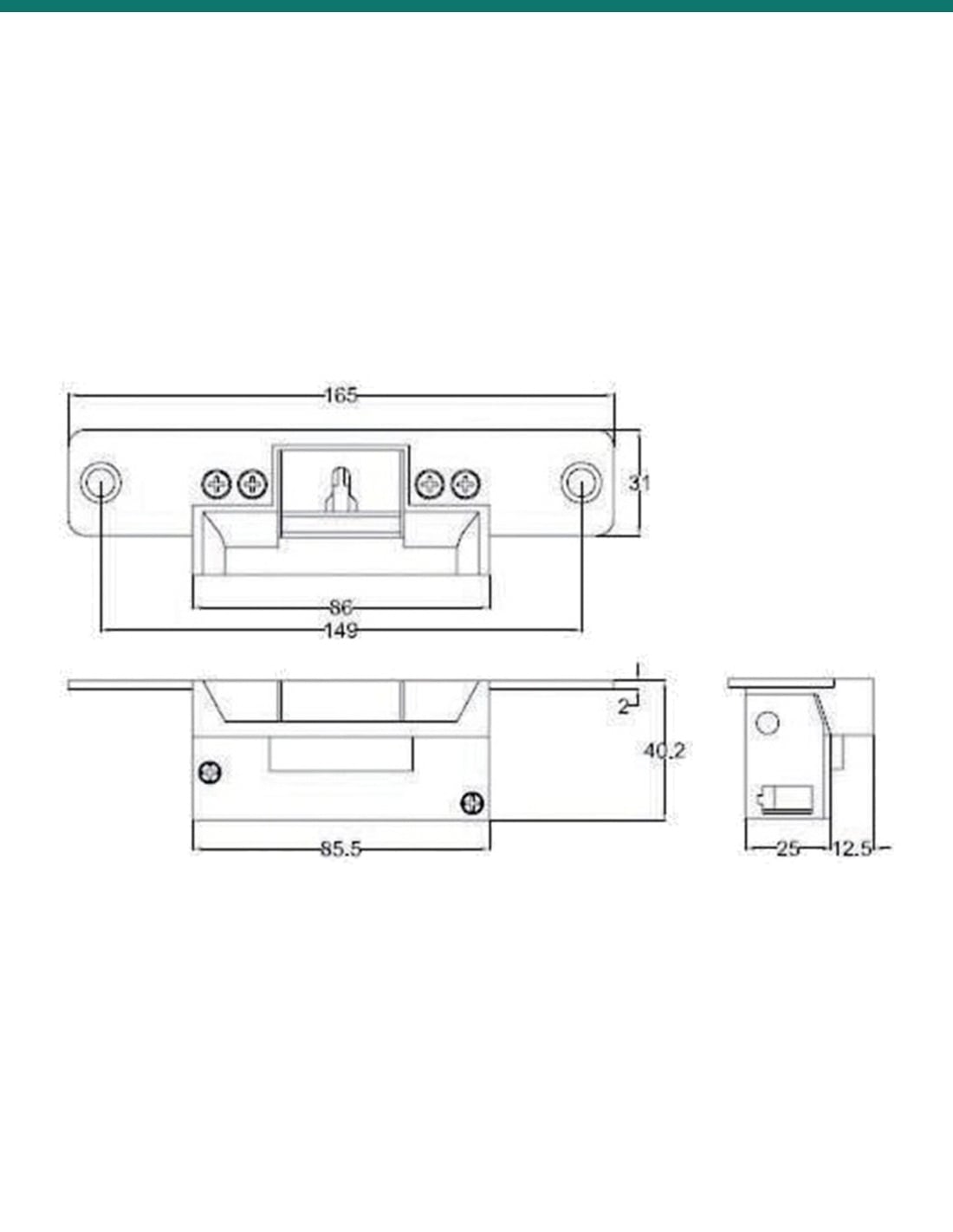
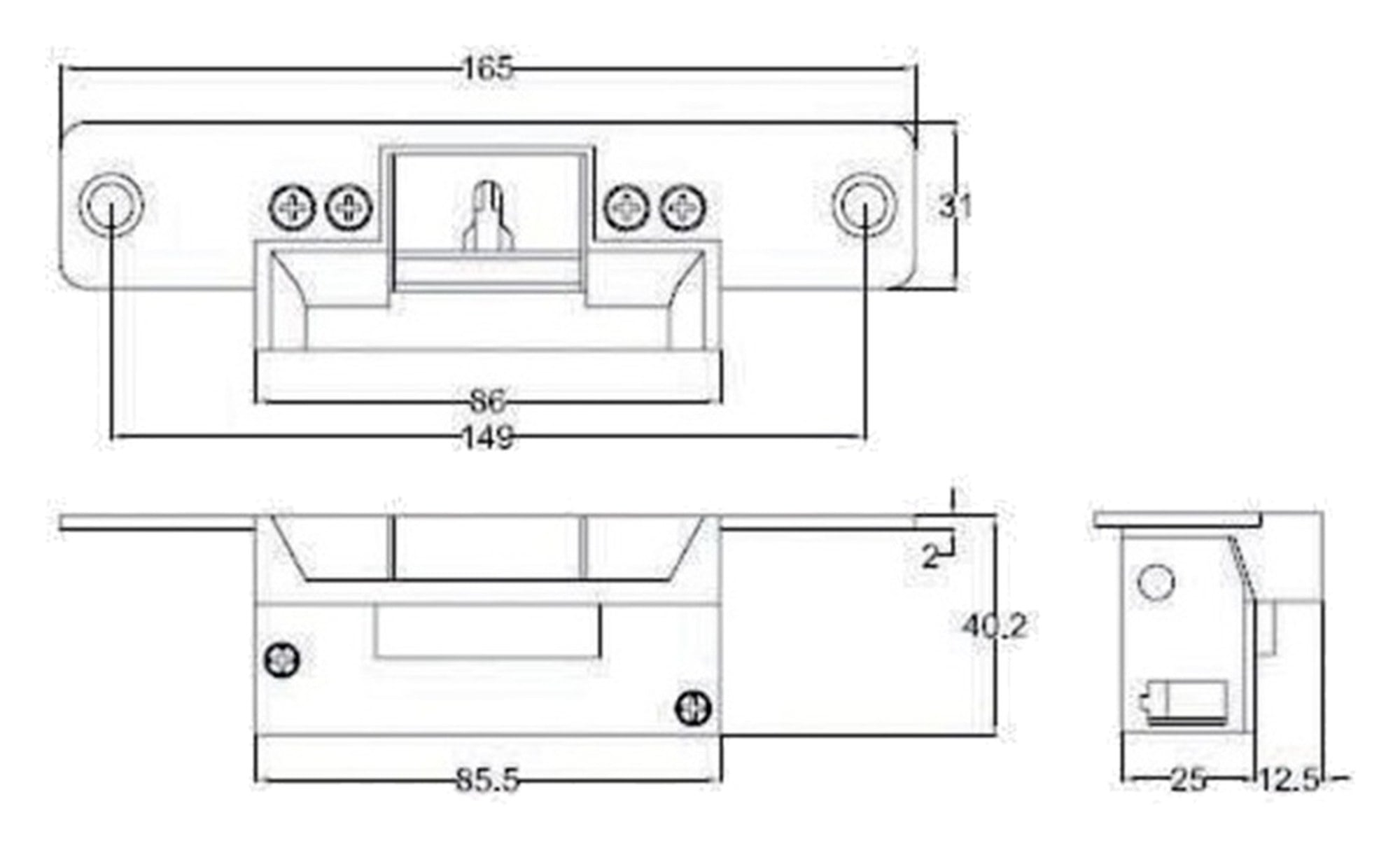
The body sits in a pocket cut into the frame and the 165 × 31 × 2 mm stainless steel faceplate screws over it, with fixing holes 149 mm apart. Overall depth is 40.2 mm. Spacers set the faceplate flush with the jamb.
How it goes in
From jamb to first swipe.
01
Prepare the jamb
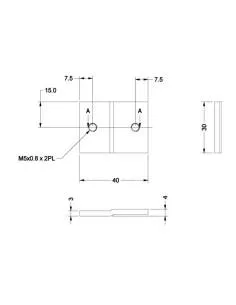
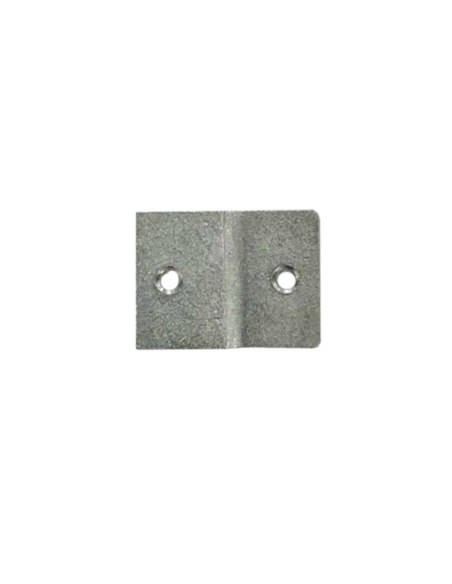
Cut the jamb to Watchguard's drawing, fit the mounting brackets with the M4 × 11 screws and pressed metal nuts, and leave them loose.
02
Set the mode
It ships fail-secure. For fail-safe, open the strike and reverse the solenoid to the other side, as the installation sheet shows.
03
Wire power and sensors
Connect the black power wires to the 12 VDC lock output, fit the varistor across them, then run the lock and door sensor contacts to the controller.
04
Fix and test
Add spacers until the faceplate sits flush, screw the strike to the brackets, then test release from the reader and check both sensors change state.
At a glance
ACLOC102
Show specs
Type
Mortise mount electric door strike
Power
12 VDC at 260 mA (see the questions about 24 V)
Lock mode
Fail-secure (default) or fail-safe, convertible on site
Sensors
Lock status sensor and door status sensor
Sensor wires
NO, NC and COM for each sensor
Door latch
12.7 mm
Keeper depth
12.7 mm
Construction
Stainless steel
Faceplate
165 × 31 × 2 mm
Fixing holes
149 mm apart
Overall size
165 × 31 × 40.2 mm
Spike protection
Varistor across the power input (supplied)
Holding force
Approx. 272 kg, Watchguard's figure for its door strike range
Warranty
3 years

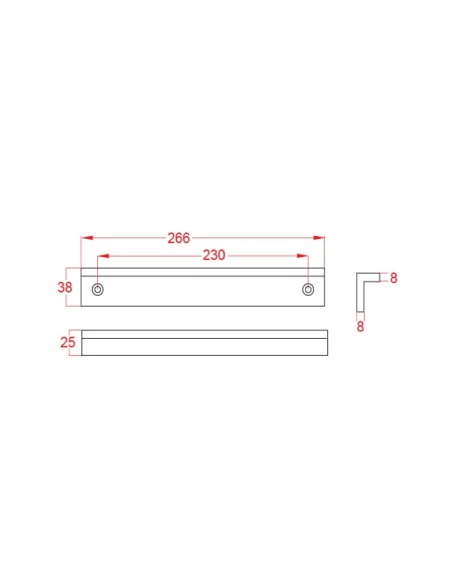
Dimensions in mm, from Watchguard's ACLOC102 drawing.
Pair it with
What switches and powers it
Reader
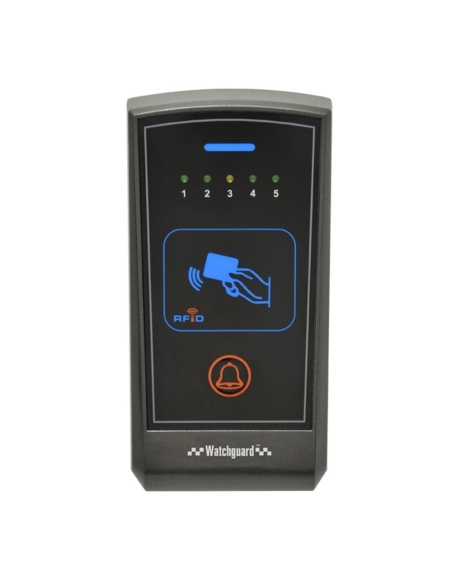
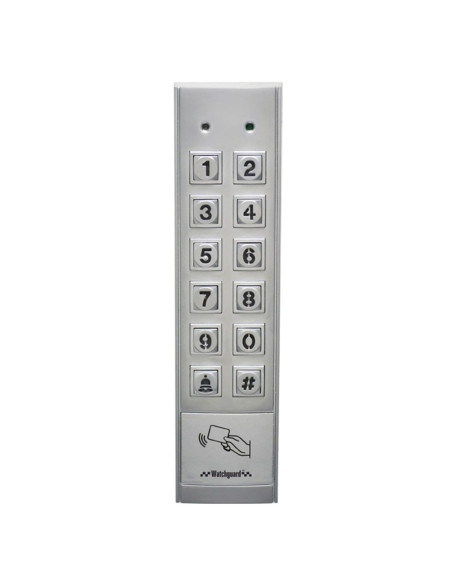
Watchguard ACRDR103 keypad
A standalone card and PIN reader made to drive electric locks directly, for fail-safe or fail-secure locks. It runs on 12 VDC.
Intercom
Akuvox R20A door phone
Two lock relays and two inputs: one relay can switch the strike's supply and an input can take the door sensor.
Exit
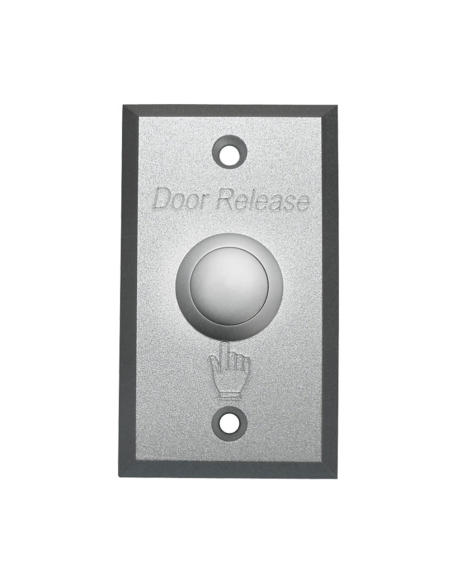
Watchguard ACDSW100 exit button
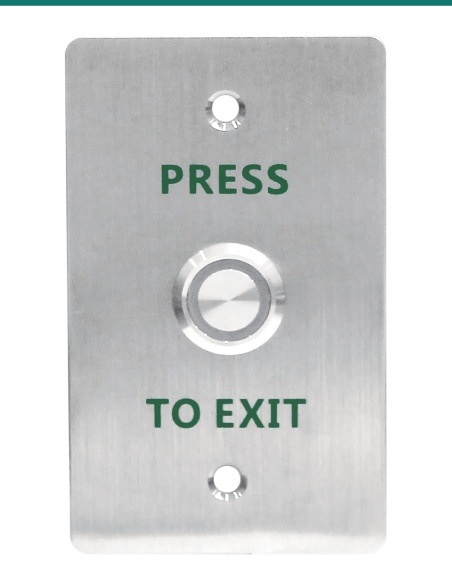
A heavy duty release button with NO, NC and COM contacts for the inside of the door.
Power
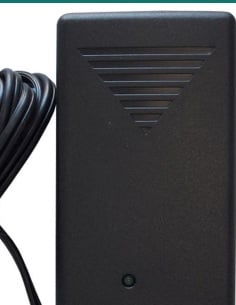
PS5000SM 12 VDC 5 A supply
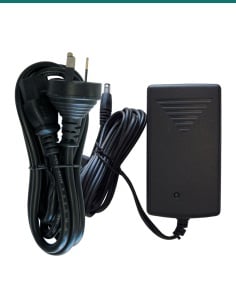
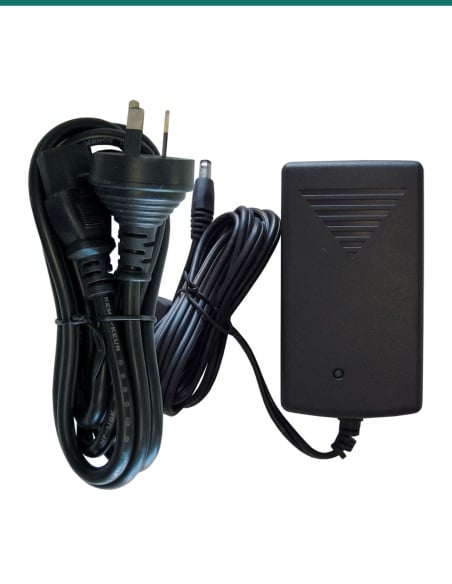
A 12 VDC switched-mode supply with a 2.1 mm plug, with headroom for a reader plus the strike's 260 mA.
Where it is used
Where it is used
Office entries
Card or PIN entry, with the door and lock state reported back.
Comms and server rooms
Know when the door is left open or forced.
Shop back doors
Set fail-secure so the door stays locked through a power cut.
Fail-safe doors
Set fail-safe where the door must release when power is cut.
Apartment entries
Released by an intercom relay, with the door sensor on an input.
Clinics and schools
Staff-only areas on a reader, with an exit button inside.
ACLOC102 or ACLOC105
| ACLOC102 (this strike) | ACLOC105 | |
|---|---|---|
| Type | Mortise mount | Mortise mount |
| Power | 12 VDC at 260 mA | 12 VDC at 280 mA or 24 VDC at 140 mA |
| Lock mode | Fail-secure or fail-safe | Fail-secure or fail-safe |
| Sensors | Lock and door | Lock, door and keeper |
| Door latch | 12.7 mm | 12.7 mm |
| Keeper depth | 12.7 mm | 10.8 mm |
| Faceplate | 165 × 31 × 2 mm | 175 × 29 × 3 mm |
| Overall size | 165 × 31 × 40.2 mm | 175 × 29 × 27 mm |
| Construction | Stainless steel | Stainless steel |
Both are on Watchguard's electronic door strikes datasheet (March 2023). Sensor details from each model's installation sheet.
Common questions
What voltage does the ACLOC102 need?
Watchguard's datasheet rates it at 12 VDC, 260 mA. That is the supply to plan for.
Can it run on 24 V?
The installation sheet also shows a 24 VAC and a 24 VDC wire pair, but the datasheet only lists 12 VDC. Ask us before running it on 24 V; the ACLOC105 is rated for 12 or 24 VDC.
Is it fail-secure or fail-safe?
Either. It ships fail-secure, which stays locked with no power. Open the strike and reverse the solenoid to make it fail-safe, which releases with no power.
What sensors does it have?
A lock status sensor, which shows whether the strike is locked or released, and a door status sensor, which shows whether the door is closed. Each has NO, NC and COM wires.
What comes in the box?
The strike with its mounting screws, a varistor for spike protection and spacers to set the faceplate flush.
What is the varistor for?
It soaks up the voltage spike when the strike's coil switches off. Connect it across the power input wires.
What size is it?
The stainless faceplate is 165 × 31 × 2 mm with fixing holes 149 mm apart, and the strike is 40.2 mm deep. It takes a 12.7 mm door latch with a 12.7 mm keeper depth.
What are the spacers for?
They go between the jamb and the mounting brackets so the faceplate finishes flush with the jamb when it would otherwise sit proud or recessed.
Will it work with a standalone reader?
Yes. Readers such as the Watchguard ACRDR103 drive the lock output directly and work with fail-safe or fail-secure locks.
Can an intercom open it?
Yes, through the intercom's lock relay switching the strike's 12 VDC supply. The Akuvox R20A has two relays and two inputs, so it can also read the door sensor.
How is it different from the ACLOC105?
The ACLOC105 runs on 12 or 24 VDC and adds a keeper sensor. The ACLOC102 is rated for 12 VDC at 260 mA with lock and door sensors.
Who should install it?
A security or access control installer. Fitting access control for others needs a security licence in most states, and concealed cabling should be run by a registered cabler.
Supported by InFront Technologies.
Need help matching the strike to your reader, intercom or power supply? Call 1300 736 970 or email [email protected]. The datasheet is on the Attachments tab.
Installation and safety
Low voltage only. Rated 12 VDC at 260 mA. Never connect the strike or its sensor contacts to mains.
Exit doors. In fail-secure mode the strike stays locked when power fails. On a door that is an exit path, check the building code and fire rules with a licensed installer before choosing the mode.
Licensing and cabling. Installing access control for others needs a security licence in most Australian states. Concealed cabling should be installed by a registered cabler.
What it does not do. It is not a reader or controller and has no keeper sensor or power supply. Watchguard publishes no weather rating, so fit it to a sheltered door.
Figures. From Watchguard's electronic door strikes datasheet (March 2023), the ACLOC102 installation sheet and its drawing.
- Construction
- Stainless steel
- Door Latch
- 12.7mm
- Faceplate Dimensions
- 160 x 31 x 2mm
- Keeper Depth
- 12.7 mm
- Lock Configuration
- Fail secure / Fail Safe
- Lock Status Sensor
- Yes
- Overall Dimensions
- 165 x 31 x 40.2mm
- Power input
- 12VDC at 260mA
- Type
- Mortise Mount