Watchguard · Wireless alarm · Reed switch
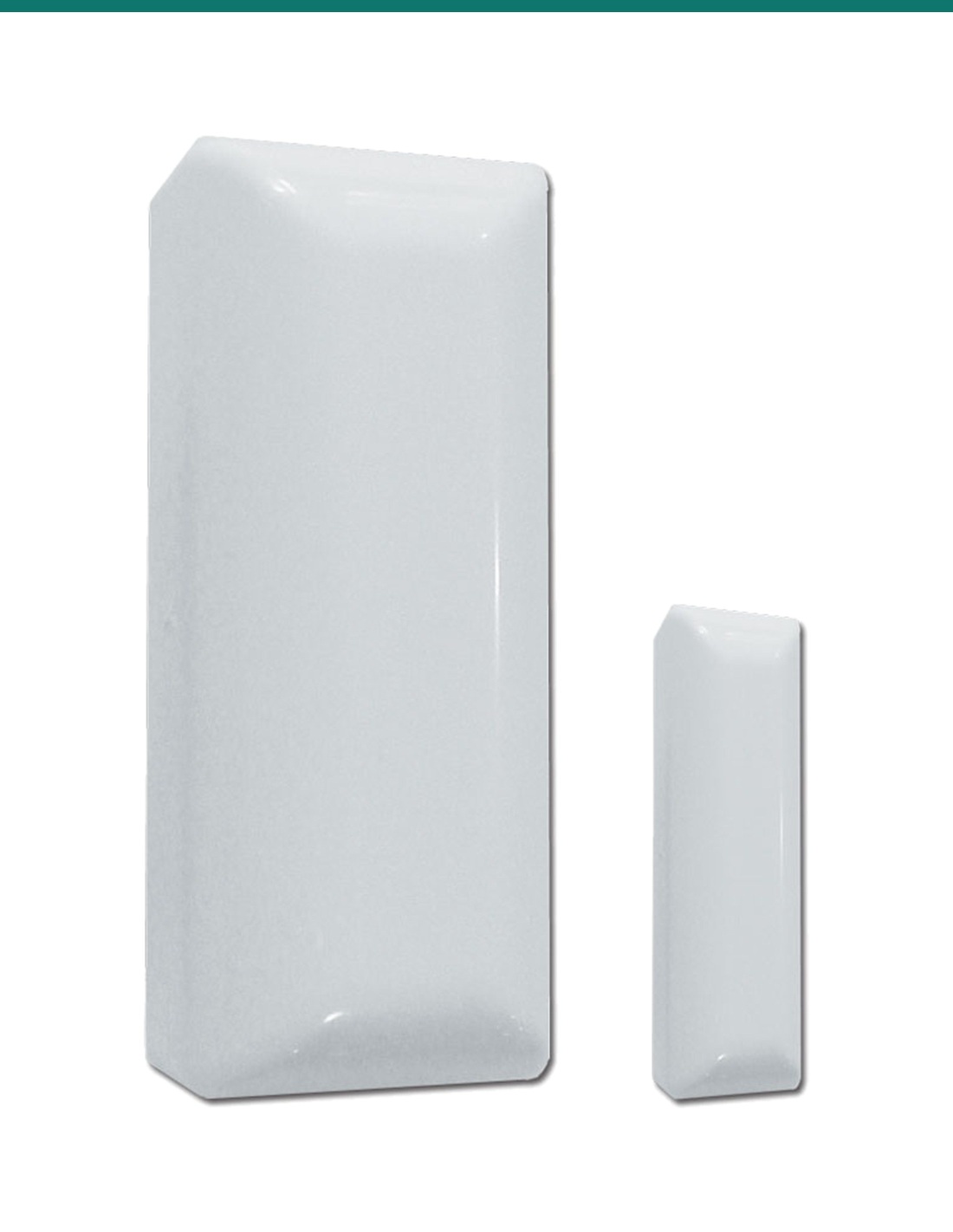
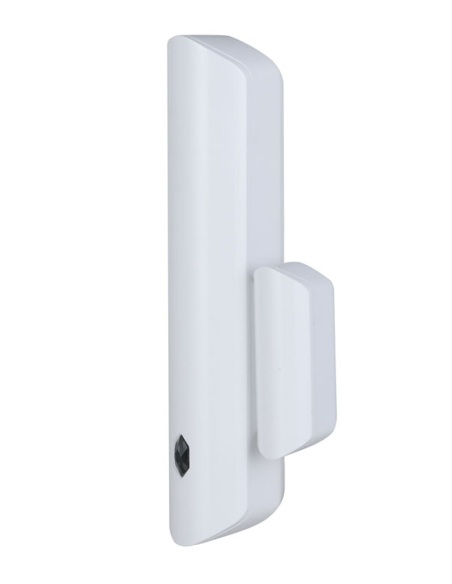
A wireless door contact.
That can make a wired sensor wireless too.
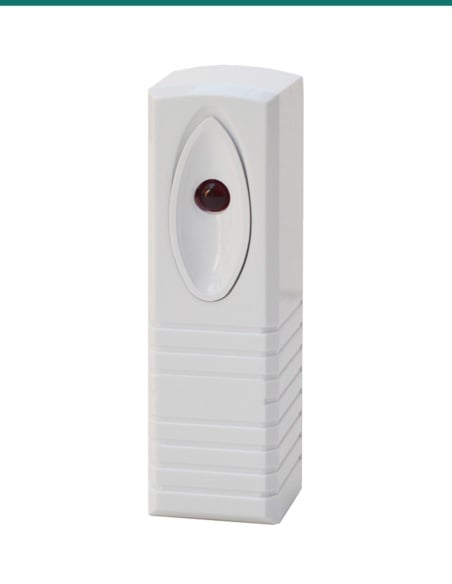
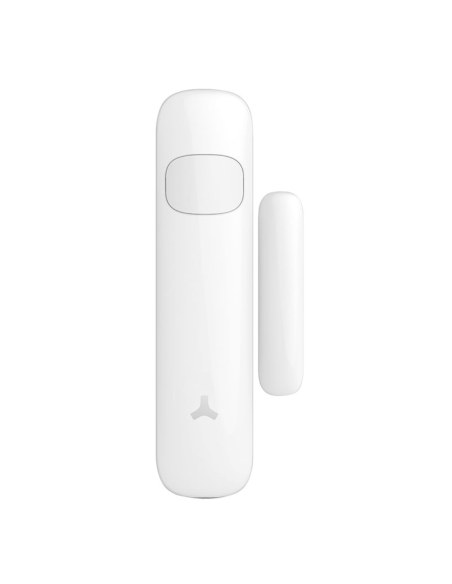
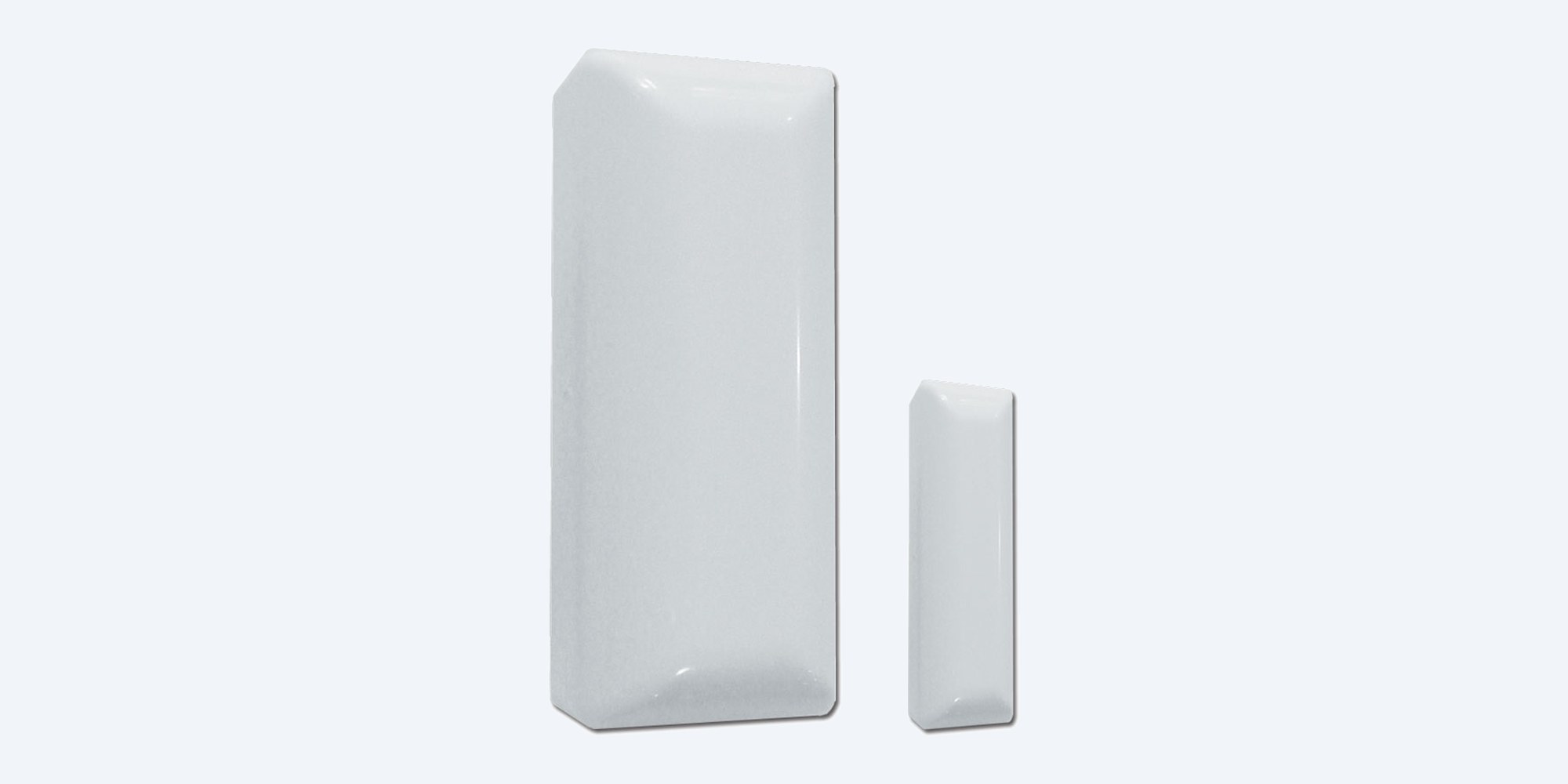
The Watchguard WREEDI is a supervised wireless reed switch for indoor doors and windows. Its built-in terminals also let it send any switched contact, such as a push button or a hardwired detector's alarm output, to a compatible Watchguard receiver.
In one sentence: the Watchguard WREEDI is an indoor wireless reed switch and universal transmitter that sends open, close, tamper, low battery and supervision signals to a compatible Watchguard receiver, running up to 5 years on two CR2450 lithium cells.
Transmitter and magnet only. It needs a compatible Watchguard receiver.
Watchguard pairs the WREEDI with its RXPROR4 433.92 MHz receiver set, which wires into a zone on an existing alarm panel or switches a 12 V siren or strobe. Watchguard doesn't list it for the WGAP864 wireless receiver or the ALM-series kits. Confirm with us before you order.
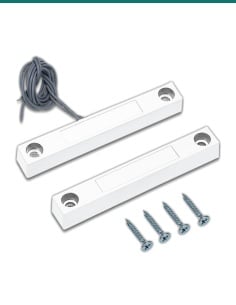
In the box- WREEDI reed switch transmitter
- Magnet
- Fixing screws
You also need- A compatible Watchguard receiver (RXPROR4); confirm with us
- Two CR2450 3 V lithium cells when they need replacing
- A small flat screwdriver to open the cases
It tells the receiver more than open and closed.
Besides door open and door closed, the WREEDI sends a tamper signal if its cover is lifted or it is pulled off the wall, a low battery warning, and a supervision check-in at least every 2.25 to 3 hours. A receiver that supports those signals, like the RXPROR4, can report a sensor that has gone quiet as well as one that has tripped.

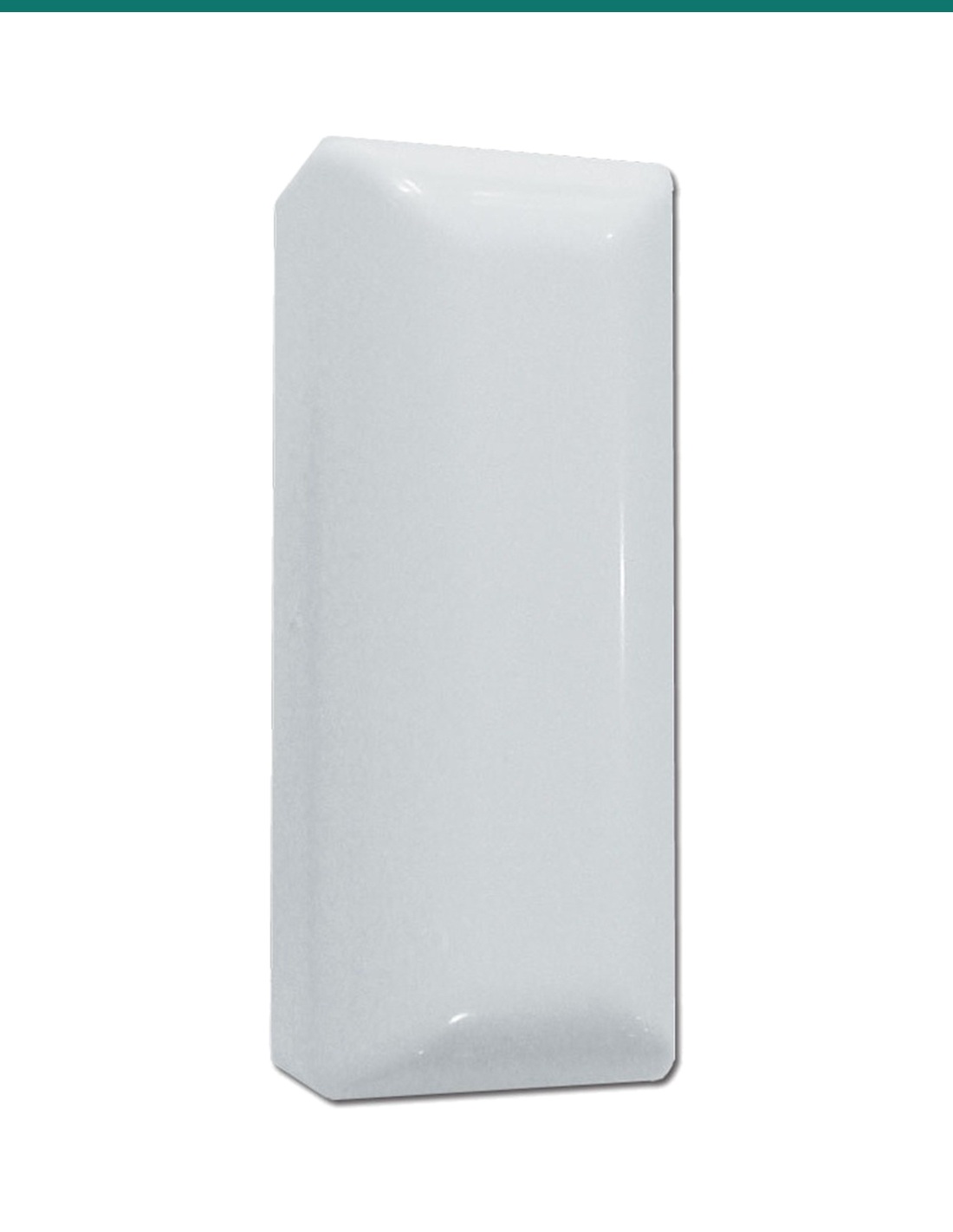
The transmitter
Two tampers, two lithium cells.
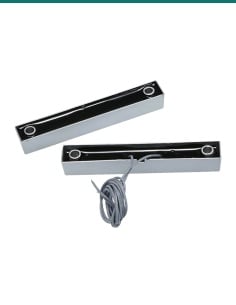
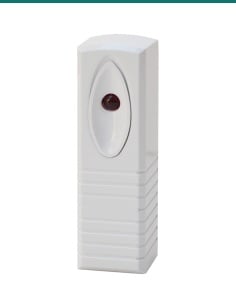
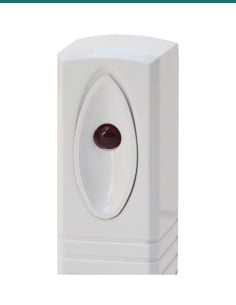
The main unit holds the reed, the radio and two CR2450 cells. Tamper switches on the cover and the base are wired in series, so opening either sends a tamper alarm. A red LED shows each transmission.

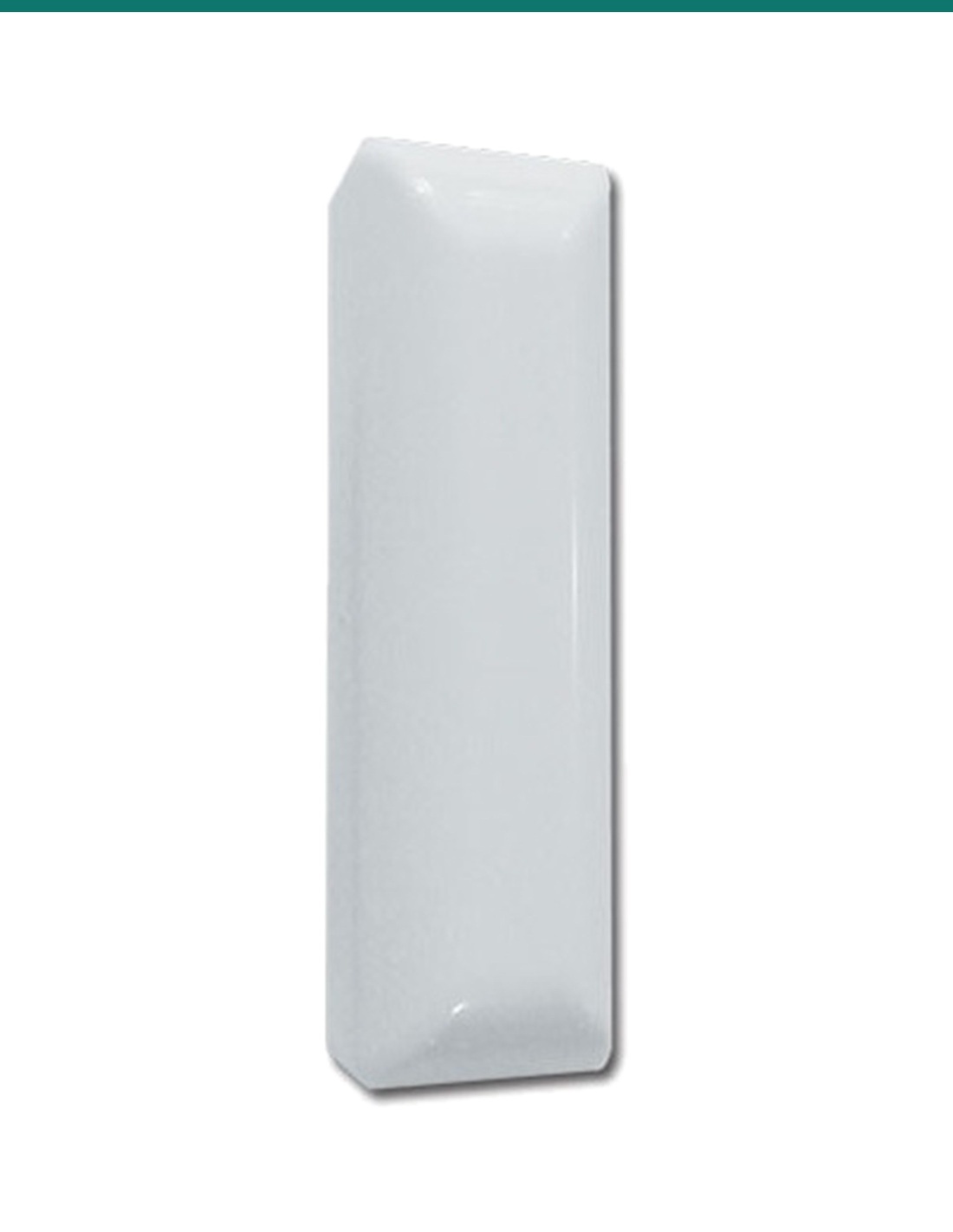
The magnet
Within 10 mm when closed.
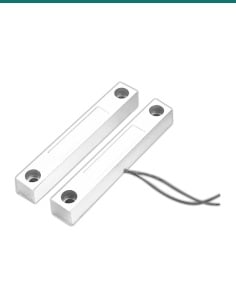
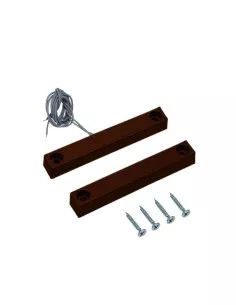
Fix the magnet to the moving door or window, beside the line on the transmitter case that marks the reed side, no more than 10 mm away when it is shut.
How it goes in
From frame to first test.
01
Open the cases
Push a small flat screwdriver into the notch at the end of each case. Bend the release tab and lift the circuit board out carefully; the glass reed is fragile.
02
Fix the cases
Screw the transmitter to the frame and the magnet to the door or window, on the reed side marked on the case, with no more than 10 mm gap when shut.
03
Wire the terminals or link them
Connect a switched contact to the universal terminals, or link them if unused. The reed only works with the terminals closed, and the terminals only work with the magnet in place.
04
Learn and test
Refit the board and covers, learn the WREEDI to the receiver as its manual describes, then open and close the door and check the receiver responds.
At a glance
WREEDI
Show specs
Type
Supervised wireless reed switch and universal transmitter, indoor
Signals sent
Reed open, reed close, tamper, low battery, supervision
Supervision
Sent at least every 2.25 to 3 hours
Tamper
Cover and base switches in series
Magnet gap
10 mm maximum when closed
Universal input
Terminals in series with the reed; switched contacts only, no powered devices
Input cable
Keep to 1 m; up to 5 m may work
Works with
Watchguard RXPROR4 433.92 MHz receiver set
Battery
2 × CR2450 3 V lithium, up to 5 years
Low battery signal
Sent at 4.5 V
Indicator
Red LED on each transmission
Mounting
Screw fixing, screws provided
Pair it with
What it works with
Receiver
Watchguard RXPROR4 receiver set
Watchguard's compatible receiver: it wires into a zone on an existing alarm panel or drives a 12 V siren or strobe. It is not listed live with us right now, so confirm with us first.
Universal input
RSW-M1 heavy duty reed switch
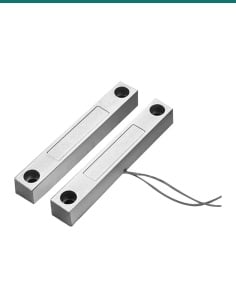
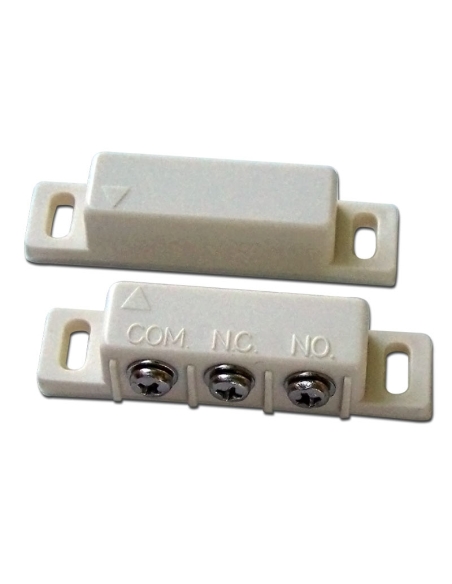
Any passive switched contact can go on the terminals, such as a Watchguard RSW-M1 on a heavy door. Keep the cable to about 1 m.
ALMKIT-D2 owners
ALM-D1-RSW door detector
The WREEDI is not listed for the ALM-series WiFi and 4G kit. The ALM-D1-RSW is the door and window detector made for that hub.
Spare
Two CR2450 lithium cells
Replace both every 5 years or when the receiver reports low battery, positive side up.
Where it is used
Where it is used
Front and back doors
Know when an entry door opens, without running cable.
Windows
Protect opening windows in rooms the cable can't reach.
Cupboards and cabinets
Alert on a medicine, gun or stock cabinet being opened.
Push buttons
Wire a press button to the terminals to make a wireless call or duress point.
Wired sensors gone wireless
Send a hardwired detector's alarm contact to the receiver over radio.
Rentals and heritage homes
Add door protection where drilling for cable isn't allowed.
WREEDI or ALM-D1-RSW
| WREEDI (this switch) | ALM-D1-RSW |
|---|
| Pairs with | Watchguard RXPROR4 receiver set | ALM-series wireless alarm hub (ALMKIT-D2) |
| Battery | 2 × CR2450, up to 5 years | CR123A, up to 5 years |
| Magnet gap | Up to 10 mm | Under 40 mm |
| Supervision | Every 2.25 to 3 hours | Not listed |
| Tamper | Cover and base | Tamper switch |
| Extra input | Universal transmitter terminals | Alarm output lead included |
| Range | Set by the receiver | Under 1000 m in open space |
From Watchguard's WREEDI brochure and instruction manual, its RXPROR4 page and its ALM-D1-RSW product page. They belong to different Watchguard systems and are not interchangeable.
Common questions
What does the WREEDI do?
It is a wireless door and window contact. When the magnet moves away it sends an open signal to the receiver; it also sends close, tamper, low battery and supervision signals.
Which receiver does it work with?
Watchguard pairs it with its RXPROR4 433.92 MHz receiver set. Confirm with us before you order, as the RXPROR4 is not listed live with us right now.
Will it work with the WGAP864 or the ALMKIT-D2 kit?
Watchguard doesn't list it for either. The WGAP864 wireless receiver takes Watchguard's WGAP864 detectors, and the ALMKIT-D2 uses the ALM-D1-RSW.
What does supervised mean here?
The WREEDI checks in with the receiver at least every 2.25 to 3 hours, so a receiver that supports supervision can tell you if the sensor stops reporting.
How far apart can the magnet be?
No more than 10 mm when the door or window is closed. Line the magnet up with the reed side marked on the transmitter case.
What is the universal transmitter?
Two terminals in series with the reed. Wire a switched contact to them, such as a push button or a hardwired detector's alarm output, and the WREEDI sends it wirelessly.
What can I connect to the terminals?
Only a switched contact, nothing that supplies power or draws current. Keep the cable to 1 m; up to 5 m may work.
Can I use the terminals without the reed?
Yes. Fix the magnet next to the transmitter so the reed stays closed, and the terminals then send open and close on their own.
What batteries does it take?
Two CR2450 3 V lithium cells, which Watchguard says last up to 5 years. It sends a low battery signal at 4.5 V; replace both cells together.
Can it go outside?
No. Watchguard describes it as an indoor reed switch and gives it no weather rating.
Does it have a tamper switch?
Yes, two in series: one on the cover and one on the base, so lifting the cover or pulling it off the wall sends a tamper alarm.
What comes in the box?
The WREEDI transmitter, its magnet and fixing screws. The receiver is sold separately.
Supported by InFront Technologies.
Not sure it suits your receiver or alarm? Call 1300 736 970 or email [email protected] before you order. The brochure is on the Attachments tab.
Installation and safety
Coin cells. Uses two CR2450 lithium coin cells. Keep spare and used cells away from children; a swallowed coin cell can cause serious injury.
Handle the board with care. The glass reed switch inside is fragile. Hold the circuit board by its edges and don't drop it.
Licensing. Installing alarm systems for others needs a security licence in most Australian states. Check your state's rules.
What it does not do. No outdoor rating, no powered inputs on the terminals, and it does not pair with the WGAP864 or ALM-series kits.
Figures. From Watchguard's WREEDI brochure, its instruction manual and its RXPROR4 product page.